
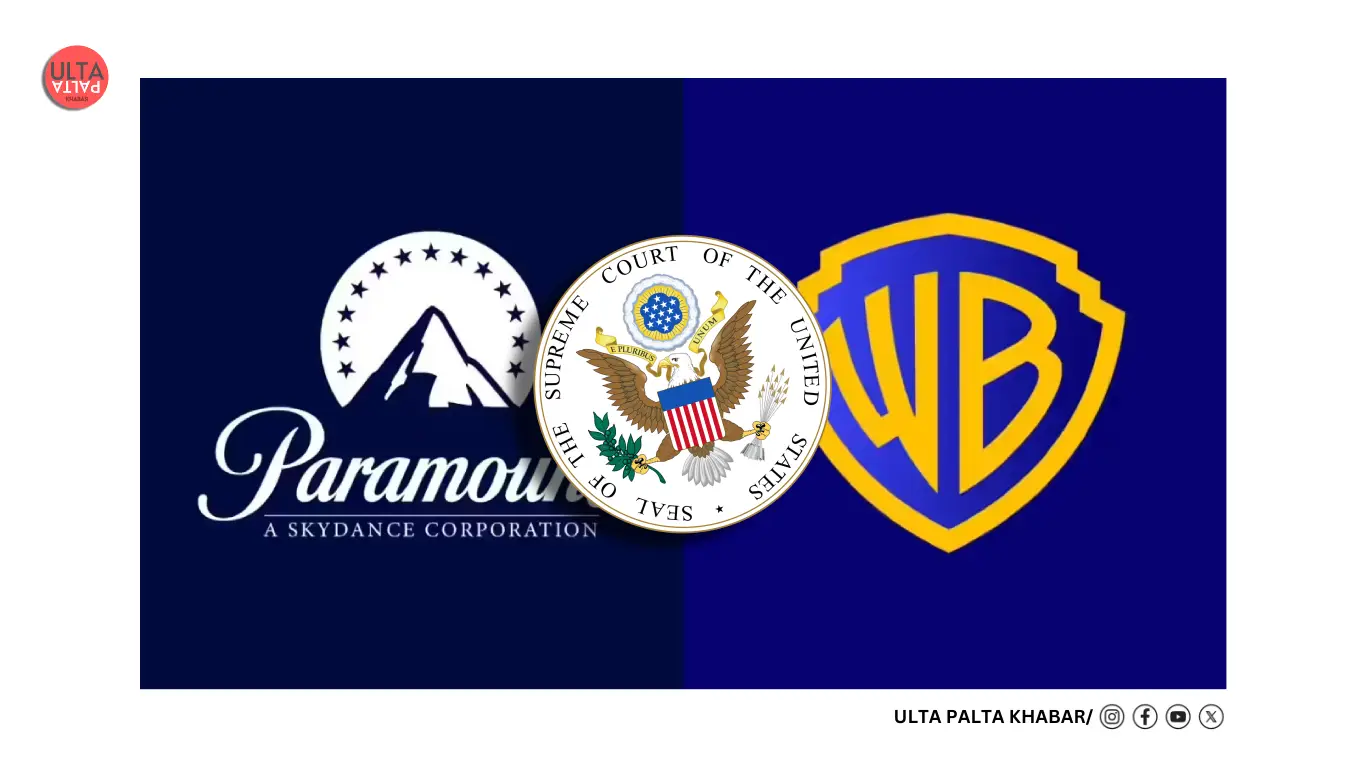

Hollywood’s biggest merger is suddenly on hold as 12 U.S. states move to block the Paramount-Warner Bros Discovery mega deal. Could this reshape the future of movies, streaming, HBO Max, CNN, Paramount+ and the global entertainment industry?
Hollywood has just witnessed one of its biggest legal shocks in years.
The proposed $81 billion merger between Paramount and Warner Bros. Discovery—a deal that promised to reshape the global entertainment landscape—has been temporarily blocked by a U.S. federal judge, throwing the future of one of the largest media mergers in history into uncertainty.
The decision has sent shockwaves across Hollywood, Wall Street and the global entertainment business, with studios, filmmakers, streaming companies and investors now closely watching what happens next.
If approved, the merger would unite two of Hollywood’s oldest and most influential studios under one corporate umbrella. But if the courts permanently stop the transaction, it could become one of the biggest antitrust victories in modern entertainment history.
Note: For optimal viewing on mobile devices, rotate the screen.
Federal Court Presses the Pause Button
On July 20, U.S. District Judge Araceli Martinez-Olguin granted a temporary restraining order that prevents Paramount and Warner Bros. Discovery from completing their merger for at least two weeks.
While the pause may sound short, its impact is enormous.
The order gives a coalition of 12 U.S. states, led by California, additional time to present their case that the merger would significantly reduce competition within the American entertainment industry.
The court has also scheduled an important hearing for August 3, where judges will decide whether a longer preliminary injunction should be issued.
If that happens, the merger could remain frozen for months while legal proceedings continue.
Note: For optimal viewing on mobile devices, rotate the screen.
Why Are U.S. States Trying to Stop the Deal?
The lawsuit argues that combining Paramount and Warner Bros. Discovery would create a media giant with unprecedented control over Hollywood.
According to the states, the merger could reduce competition across several key entertainment sectors, including:
- Theatrical film distribution
- Blockbuster movie releases
- Basic cable television licensing
Officials claim that such enormous market power could ultimately hurt audiences.
Their concerns include:
- Higher ticket prices
- Reduced consumer choice
- Less competition among studios
- Fewer creative opportunities
- Lower wages for entertainment workers
- Reduced investment in original content
California Attorney General Rob Bonta described the merger as a threat to competition, arguing that concentrating so much power within one company would negatively affect both consumers and industry professionals.
A New Hollywood Superpower?
If the merger eventually receives approval, the combined company would own an astonishing collection of entertainment brands.
Warner Bros. Discovery contributes:
- Warner Bros. Pictures
- HBO Max
- CNN
- DC Studios
- Harry Potter
- Game of Thrones
- Discovery networks
Paramount brings:
- Paramount Pictures
- Paramount+
- CBS
- Showtime
- Top Gun
- Mission: Impossible
- Star Trek
- Nickelodeon
- MTV
- Comedy Central
Together, these assets would create one of the largest entertainment companies ever assembled.
The combined library would include thousands of films, television shows and globally recognized franchises.
Streaming Wars Could Change Forever
One of the biggest reasons Paramount wants the merger is simple.
Competition.
Streaming has transformed Hollywood.
Netflix continues dominating globally.
Disney remains a major force through Disney+.
Amazon MGM has rapidly expanded.
Apple TV+ keeps investing billions.
Paramount argues that joining forces with Warner would allow it to compete more effectively against these technology-driven entertainment giants.
Executives believe combining HBO Max and Paramount+ assets would create a much stronger streaming competitor capable of challenging Netflix’s worldwide dominance.
Critics, however, believe consumers would ultimately lose because fewer major studios would mean less competition.
Movie Theaters Are Watching Closely
The legal battle also carries enormous consequences for cinema owners.
A merged Paramount-Warner studio would control an impressive slate of blockbuster releases every year.
That level of market power could give the company stronger negotiating leverage with theater chains regarding:
- Screening windows
- Revenue sharing
- Marketing agreements
- Premium screen allocation
Independent theaters are particularly concerned that a larger studio could dictate tougher commercial terms.
Meanwhile, the states argue that reducing the number of major Hollywood studios from five effectively strengthens the remaining players even further.
The Clock Is Ticking for Paramount
Time has suddenly become one of Paramount’s biggest enemies.
Under its merger agreement, the company has reportedly committed to paying shareholders approximately $7 million per day if the transaction isn’t completed by September 30.
Those so-called “ticking fees” create enormous financial pressure.
Every additional delay increases costs.
That explains why Paramount requested an accelerated court schedule.
The states rejected that proposal, arguing that such a massive merger deserves a full legal review rather than a rushed decision.
Politics Enter the Conversation
The merger has also become politically sensitive.
Although the U.S. Justice Department insists its review has remained independent, political debates continue surrounding the transaction.
Some lawsuits have questioned relationships involving Paramount leadership and political figures.
Others have expressed concern about what new ownership could mean for influential news organizations like CNN and CBS.
Paramount has repeatedly denied any allegations suggesting improper conduct, maintaining that the acquisition is entirely lawful and beneficial for consumers.
What Happens If the Merger Fails?
Should courts permanently block the acquisition, Hollywood could experience another wave of strategic restructuring.
Paramount may have to explore alternative partnerships or internal cost-cutting initiatives.
Warner Bros. Discovery would continue operating independently while evaluating future growth opportunities.
Meanwhile, competitors such as Netflix, Disney, Amazon MGM and Apple could strengthen their positions without facing an even larger traditional Hollywood rival.
For audiences, a failed merger would likely preserve greater competition among legacy studios.
For investors, however, it could create significant uncertainty regarding long-term valuations.
What This Means for Filmmakers and Talent
Beyond boardrooms and billion-dollar valuations, the outcome could directly affect creative professionals.
Writers, directors, producers and actors often worry that media consolidation leads to fewer greenlit projects.
When companies merge, overlapping departments are frequently eliminated.
Production budgets may be reduced.
Development pipelines become smaller.
The Writers Guild of America has already joined legal efforts opposing the merger, arguing that reduced competition could negatively impact employment opportunities for writers.
Hollywood unions will be monitoring every stage of the legal proceedings.
Could This Become Hollywood’s Biggest Legal Battle in Years?
Many industry analysts believe this case may define the future of media consolidation in the streaming era.
For years, Hollywood has witnessed enormous mergers.
Disney acquired 21st Century Fox.
Amazon purchased MGM.
Skydance acquired Paramount.
Now, regulators appear increasingly willing to challenge further consolidation.
If courts ultimately block Paramount’s acquisition of Warner Bros. Discovery, it could discourage future mega-mergers across entertainment.
Conversely, if Paramount wins, the decision may trigger another wave of billion-dollar acquisitions throughout Hollywood.
The Bottom Line
For now, one thing is clear—Hollywood’s biggest corporate wedding has been stopped at the altar.
The temporary restraining order has transformed what seemed like an inevitable blockbuster merger into one of the industry’s most closely watched legal battles.
With billions of dollars, iconic studios, legendary franchises and the future of global entertainment hanging in the balance, every courtroom development will be watched as closely as the next superhero blockbuster.
Whether Paramount and Warner Bros. Discovery eventually become one entertainment powerhouse—or remain fierce competitors—will now depend not on studio executives, but on the U.S. courts.
And for Hollywood, the verdict could shape the industry for decades to come.
Note: For optimal viewing on mobile devices, rotate the screen.
You May Like:
- ultapaltakhabar.com/dharman-rajinikanth-becomes-the-deadly-doctor-as-kamal-haasans-dream-project-finally-takes-shape-after-years-of-delays/
- ultapaltakhabar.com/bts-leader-rm-creates-history-kim-namjoon-becomes-first-ever-global-ambassador-of-national-museum-of-korea-army-celebrates-another-iconic-milestone/
- https://ultapaltakhabar.com/south-korean-box-office-colony-dominates-again-as-spielbergs-disclosure-day-opens-strong-korean-cinema-faces-new-challenge/
- ultapaltakhabar.com/ranveer-singh-gets-massive-relief-as-fwice-revokes-boycott-poonam-dhillon-reveals-actors-father-personally-thanked-her/




 By
By