
Aasif Khan’s wife, Zeba, breaks her silence after the actor’s clash with Qazi Touqeer on Bigg Boss 20. She reveals his frightening medical ordeal, explains why he initially cited GERD and condemns the alleged threats targeting their family.
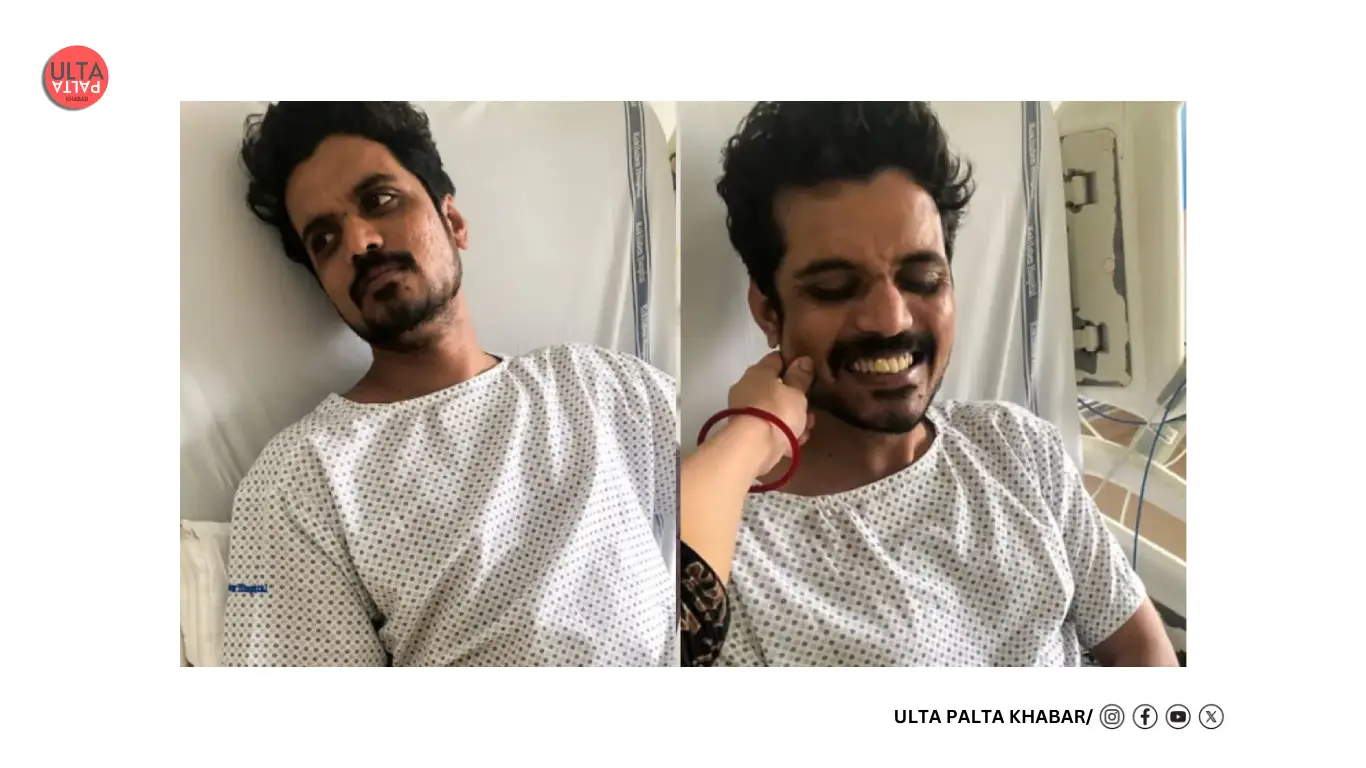
Mumbai: A reality television argument has taken a deeply personal turn for Panchayat actor Aasif Khan. His wife, Zeba, has spoken out about the actor’s reported heart attack at the age of 34, revealing that he spent 21 days in hospital and underwent intensive treatment. Her emotional statement comes after a heated exchange between Aasif and fellow contestant Qazi Touqeer on Bigg Boss 20 brought the actor’s past health scare back into the spotlight.
Note: For optimal viewing on mobile devices, rotate the screen.
But Zeba’s revelations go beyond the medical emergency. She has alleged that her family faced online abuse, death threats against Aasif and rape threats following the controversy. According to her, what began as a disagreement on an entertainment reality show has crossed a line that should never have been crossed.
Note: For optimal viewing on mobile devices, rotate the screen.
Her message has raised uncomfortable questions about reality television, online fandom and the price contestants can pay when arguments inside a television house spill into their private lives.
Aasif Khan’s Wife Zeba Reveals His 21-Day Hospital Stay
In a strongly worded statement, Zeba explained that she had initially chosen to remain silent, hoping the controversy would eventually fade away. However, she said the accusations and negativity directed at her husband and their family left her feeling compelled to speak publicly.
Zeba confirmed that, according to her account, Aasif had suffered a massive heart attack at just 34.
She also expressed distress over having to share personal medical information to convince people of the seriousness of his condition.
For Zeba, the experience was not simply another celebrity health scare. She had witnessed her husband’s suffering firsthand and recalled the frightening circumstances surrounding his hospitalisation.
According to her statement, doctors told the family that his main coronary artery was completely blocked. She also described his time in the intensive care unit and the insertion of a stent.
These details offer a glimpse into the severity of the medical emergency she says he experienced. They also explain why she reacted so strongly when his health became a subject of debate following the Bigg Boss 20 argument.
Zeba further revealed that Aasif had already lost his father to a heart attack when he was a child. Experiencing a similar medical emergency himself brought back painful memories and the fear of leaving his own family behind.
Her account transforms the controversy from a reality-show disagreement into a deeply personal story about illness, fear and recovery.
Why Aasif Khan Initially Said He Had GERD
One of the most significant aspects of Zeba’s statement concerns the difference between Aasif’s earlier public explanation and what she has now revealed.
Following his hospitalisation in July 2025, Aasif had publicly said that he had been diagnosed with gastro-oesophageal reflux disease, commonly known as GERD, rather than suffering a heart attack. He had explained that the symptoms felt similar to a cardiac emergency and said he was fit.
Zeba has now offered a different account of why he initially described the episode as GERD.
According to her, Aasif was afraid that revealing a serious heart condition could damage his professional prospects. She said he worried that producers might hesitate to offer him projects if they believed his health could interfere with demanding shooting schedules.
In her statement, she described that fear as particularly real in an industry where opportunities can be uncertain, especially for actors who do not have powerful backing.
Her explanation highlights an issue that can affect performers across the entertainment business: the pressure to protect their professional image while dealing with personal challenges.
Acting careers often depend on casting decisions, production schedules and the confidence of filmmakers investing in a project. A serious health disclosure may prompt questions about availability, although an actor’s actual medical fitness can only be assessed individually.
However, Zeba’s statement does not establish that any producer rejected Aasif because of his health. It reveals the fear she says influenced his initial explanation, rather than proving that his career was directly affected.
The distinction matters because it separates the family’s account of a frightening experience from assumptions about the industry’s response.
It also raises a broader question: should performers feel compelled to conceal a serious medical condition because they fear losing work?
For now, Zeba’s comments have brought that concern into the public conversation, but the long-term effect on Aasif’s career remains uncertain.
Qazi Touqeer’s Heart Attack Remark Triggers Bigg Boss 20 Controversy
The immediate trigger for Zeba’s statement was a heated exchange between Aasif and Qazi Touqeer during a task on Bigg Boss 20.
During the disagreement, Qazi made a remark involving a heart attack. Aasif interpreted it as a reference to his own medical history, and tensions between the contestants escalated.
Qazi subsequently apologised and explained that his remark was connected to an earlier exchange in which Mahhi Vij had called him boring. His explanation, however, did not immediately resolve the disagreement.
The episode brought renewed attention to Aasif’s previous hospitalisation and prompted discussion among viewers about whether his health had been treated insensitively.
It is important to distinguish the participants’ perspectives. Aasif felt the remark was directed at him, while Qazi offered a different explanation for the context in which he made it. The exchange should therefore be understood through the available accounts rather than assumptions about anyone’s intentions.
Nevertheless, the incident demonstrates how quickly a reality-show argument can become more serious when it touches on a contestant’s medical history.
On programmes built around conflict, competition and emotional reactions, remarks can be interpreted differently by the people involved and by viewers watching at home. Once clips circulate online, the original context can become harder to establish.
That can turn a disagreement lasting a few moments into a prolonged controversy.
Zeba Alleges Death Threats and Rape Threats Against the Family
Perhaps the most disturbing part of Zeba’s statement concerns the alleged threats.
She said the family had faced abuse, death threats against Aasif and rape threats directed at their family. She also expressed pain over seeing his health turned into a joke and his account questioned.
These are serious allegations, and they should not be treated as ordinary celebrity gossip. The threats described by Zeba have not been independently established here, but her account makes clear that she believes the situation has gone far beyond criticism of a television contestant.
She challenged the idea that entertainment could justify cruelty, asking why disagreements on a reality show should become reasons to threaten someone’s life or target their family.
Her central argument was straightforward: viewers can disagree with a contestant’s behaviour without attacking their loved ones or wishing harm upon them.
The distinction is particularly important in the age of social media, where viewers can respond instantly to reality-show episodes. Criticism of a contestant’s decisions is part of public discussion, but threats and targeted harassment are not simply stronger forms of criticism.
Zeba’s statement also highlights the impact such behaviour can have on people who are not participating in the show. A contestant may choose to enter a reality programme, but their relatives have not necessarily agreed to become targets of online hostility.
If the family has received threats, preserving evidence and reporting them through the appropriate platform or legal channels may be important. The allegations deserve serious attention rather than being dismissed as another episode of television drama.
How the Controversy Could Affect Aasif Khan’s Bigg Boss 20 Journey
The immediate consequence is likely to be increased scrutiny of Aasif’s interactions inside the house. Viewers may reassess the argument with Qazi in light of Zeba’s account, while subsequent disagreements could attract closer attention.
However, the controversy does not automatically determine how the audience will respond to Aasif or Qazi. Reality-show viewers often distinguish between a contestant’s overall behaviour and an individual incident, and reactions may change as more context becomes available.
For Aasif, the situation presents a difficult balance. He is participating in a competitive entertainment format, yet his medical history has become part of the conversation surrounding his behaviour.
His wife has made it clear that the family considers the health issue deeply personal. Further discussion of the incident may therefore intensify public interest while also placing additional emotional pressure on those involved.
For Qazi, the episode could prompt questions about the boundaries of humour and provocation during arguments. His apology and explanation form part of the available account, but viewers may continue to debate whether the remark was appropriate in the circumstances.
The show’s broader challenge is to ensure that disagreements remain within the bounds of entertainment rather than encouraging personal harassment outside the house.
Whether the controversy has any impact on contestants’ standing or future opportunities remains to be seen.
A Bigger Question About Reality TV and Celebrity Privacy
Zeba’s statement has also highlighted the difficult position performers can find themselves in when private medical experiences become public controversies.
A serious health emergency is not merely a piece of information for audiences to debate. It can involve physical recovery, emotional distress and uncertainty about the future. For families, the experience can remain frightening long after a patient leaves hospital.
In Aasif’s case, Zeba says his earlier explanation was influenced by anxiety about his professional future. Her account raises questions about whether entertainment professionals feel safe discussing medical issues openly.
It also illustrates the responsibilities that come with online fandom. Public figures can expect scrutiny of their performances and behaviour, but that does not mean every aspect of their personal lives should become material for ridicule.
The future consequences will depend partly on how the controversy develops, whether the family takes further action over the alleged threats and how Aasif’s journey on Bigg Boss 20 unfolds.
There is no confirmed indication that the incident has changed his professional commitments or future casting prospects.
For now, the most important issue is not which contestant wins an argument. It is whether a television disagreement can be discussed without turning a family’s painful experience into a target for abuse.
Zeba’s Final Appeal: Criticism Is Not Cruelty
Zeba concluded her statement by reminding audiences that every reality-show contestant has a life beyond the cameras.
She urged people to choose empathy and kindness, arguing that no disagreement should come at the cost of basic human decency.
Her words deliver a message that extends beyond Bigg Boss 20. Reality television may thrive on competition, emotional confrontations and divided loyalties, but the people involved remain human beings with families, fears and personal struggles.
Aasif Khan’s reported medical emergency has now become central to a controversy that began with a remark during a task. Zeba’s account has provided further context about what she says her husband endured, why he initially described his condition differently and how the family has been affected by the backlash.
The allegations of threats remain serious and warrant careful handling, while the precise intentions behind the contestants’ exchange should not be assumed.
As the debate continues, one thing should remain clear: viewers do not have to support every contestant, approve of every decision or agree with every explanation. But criticism should never become a justification for threats against a person or their family.
In the end, the real test for Bigg Boss 20’s audience may not be choosing a side in the Aasif Khan-Qazi Touqeer clash. It may be remembering that behind every reality-show controversy are real people whose lives continue after the cameras stop rolling.
Note: For optimal viewing on mobile devices, rotate the screen.
You May Like:
- ultapaltakhabar.com/hanuman-ansh-misses-oscar-deadline-inr-2-crore-film-crosses-inr-205-crore-as-makers-reveal-why-indias-official-entry-dream-was-lost/
- ultapaltakhabar.com/tamil-cinema-faces-september-shutdown-no-new-tamil-film-releases-from-september-1-as-producers-clash-with-theatre-owners-over-8-week-ott-rule/
- https://ultapaltakhabar.com/cinemark-backs-111-billion-paramount-warner-bros-merger-as-all-major-u-s-theater-chains-line-up-behind-david-ellison/
- ultapaltakhabar.com/oscars-2027-budget-youtube-move-and-ai-debate-academy-reveals-its-big-plans-for-hollywoods-future/





 By