
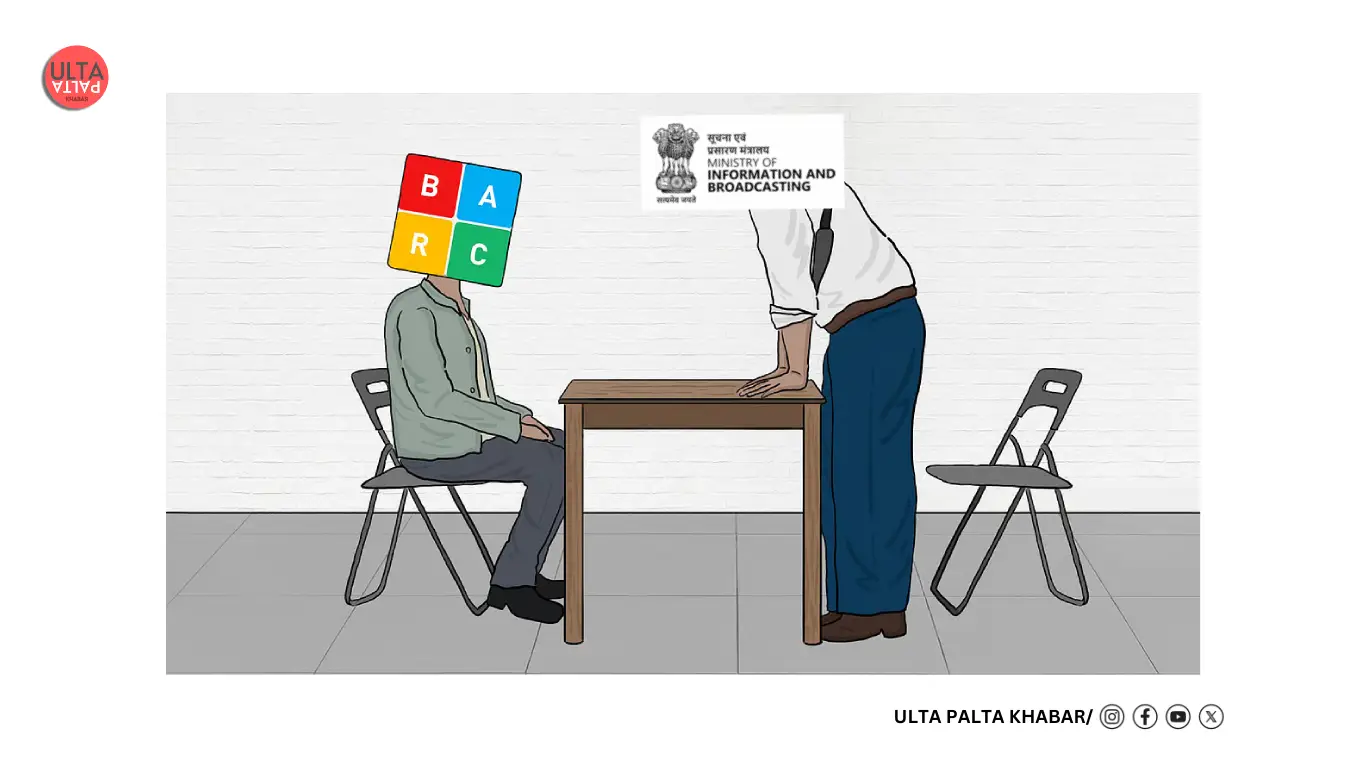

The government wants a credible replacement for India’s television ratings system rather than a quick fix. With cross-media measurement and set-top-box data under scrutiny, broadcasters, advertisers and cable operators are facing an uncertain future.
India’s television industry is waiting for its biggest ratings reset in years, but the government is refusing to press the fast-forward button. The Ministry of Information and Broadcasting (I&B) wants a television audience measurement system that the entire industry can trust, even if it means extending the ongoing ratings uncertainty. And the latest developments suggest that the future of television ratings in India may not necessarily revolve around the Broadcast Audience Research Council (BARC).
Note: For optimal viewing on mobile devices, rotate the screen.
According to a report by Storyboard18, citing highly placed ministry sources, the government believes that industry stakeholders have not yet arrived at a workable solution. Instead of rushing into a new arrangement, the ministry has asked the industry to go back to the drawing board and develop a system that delivers accurate and credible audience data.
That is a significant development for an industry where television ratings influence everything from advertising rates and channel popularity to programme budgets and decisions about which shows survive.
Note: For optimal viewing on mobile devices, rotate the screen.
The government is now examining two possible approaches: cross-media measurement and Return-Path Data (RPD). Both promise a more comprehensive picture of viewing habits, but the ministry wants evidence that these systems can work reliably before accepting them as a solution.
Is BARC’s dominance finally under threat?
For years, BARC India has been the central television audience measurement body in the country. Its ratings have served as an important reference point for broadcasters, advertisers, media agencies and television distribution companies.
But the current regulatory situation has placed the organisation under pressure.
The government introduced the Television Ratings Policy 2026 on March 27, replacing the earlier 2014 guidelines. The new framework aims to improve transparency, accountability, independence and accuracy in television audience measurement.
Under the revised policy, the government has proposed a larger measurement panel, technology-neutral measurement across platforms, independent audits, stricter governance requirements and safeguards against conflicts of interest.
The metered-home sample is being expanded from 50,000 to 80,000, while the policy also recognises the growing importance of connected televisions and television channels available through OTT platforms.
However, the transition has not been smooth. BARC’s registration and compliance process remains a major issue, and the ministry has withheld permission for the publication of ratings pending the required regulatory clearance.
The latest comments attributed to ministry sources indicate that the government is not simply looking for BARC to resume its previous operations. It wants a system that can command confidence across the market.
The ministry has also reportedly referred to the experience of Television Audience Measurement (TAM), which previously operated as India’s television ratings provider before BARC became the industry’s principal ratings body. The lesson, according to the reported comments, is that replacing one measurement system with another is pointless unless the new arrangement is credible.
That raises an important question: could India eventually move towards a ratings ecosystem in which BARC is no longer the only major player?
The possibility is clearly part of the wider industry discussion, although no final decision has been announced.
Cross-media measurement: One viewer, multiple screens
One of the major proposals under consideration is cross-media measurement.
The idea is simple but important. Today’s audience does not watch entertainment exclusively on television. A viewer may watch a daily soap on a television set, catch a reality-show clip on a smartphone, stream a programme through a connected TV and later watch highlights on a digital platform.
Traditional television ratings cannot independently capture this entire journey.
Cross-media measurement aims to understand viewing behaviour across television and digital platforms, providing a more complete picture of how audiences consume content.
For broadcasters, this could change how they evaluate the popularity of a show. A programme that attracts a modest television audience may still have a significant digital following. A combined measurement system could help advertisers understand its overall reach more accurately.
It could also benefit advertisers who increasingly want to know whether their campaigns are reaching the same viewers repeatedly across different platforms or attracting genuinely new audiences.
However, implementing such a system is not easy. Different platforms collect data in different ways, and combining those figures requires common standards, reliable technology, privacy safeguards and cooperation among multiple stakeholders.
The ministry reportedly wants the industry to demonstrate that cross-media measurement can work beyond presentations and pilot projects.
Return-Path Data: Can set-top boxes change India’s TRP game?
The second major proposal is Return-Path Data, commonly known as RPD.
Unlike traditional panel-based measurement, which uses a selected group of households to estimate wider viewing behaviour, RPD can collect viewing information directly from connected set-top boxes and distribution systems.
This offers the possibility of accessing a much larger volume of viewing data.
For multi-system operators (MSOs), which distribute television channels through cable networks, RPD could provide valuable information about which channels subscribers are watching and how viewing patterns change over time.
It sounds like an attractive alternative to relying entirely on a sample of metered homes. However, a large amount of data does not automatically mean accurate national ratings.
RPD figures can reflect the behaviour of subscribers connected to a particular distribution network. They may not represent the entire television audience, especially when different operators have different subscriber bases, regional footprints and customer profiles.
To become a trusted ratings currency, such data would need consistent definitions, transparent methodology, proper verification and a credible way to account for audiences outside the participating networks.
That is precisely why the ministry is reportedly asking stakeholders to establish how RPD-based measurement can comply with the Television Ratings Policy 2026.
GTPL Hathway order puts cable operators on the spot
The debate has become more complicated after the ministry directed GTPL Hathway to stop publishing its RPD-based viewership figures.
GTPL subsequently removed the data from its platform.
The development has left other multi-system operators watching closely. Several MSOs that already publish or are planning to publish RPD-based audience figures want clarity from the ministry about what is permitted under the new policy.
Their concern is practical: if they have collected viewing data through their distribution networks, can they publish it publicly? If they can, what conditions must they satisfy? And where does the distinction lie between sharing distribution-platform analytics and operating a television ratings service?
These questions matter because the new policy regulates entities providing television rating services, while its provisions also address the publication of certain periodic viewership data by television distribution and OTT platforms.
The precise regulatory interpretation and the conditions applicable to individual operators will therefore be important.
MSOs are expected to approach the ministry individually to seek clarification. Until the government provides a clearer framework, operators may remain cautious about making their numbers public.
Why the ratings blackout is hurting broadcasters and advertisers
The absence of a widely accepted ratings currency is not merely an administrative problem. It affects the commercial engine of television.
Broadcasters use ratings to assess the performance of programmes, decide whether to renew or replace shows, plan schedules and demonstrate audience reach to advertisers.
Advertisers and media agencies use the figures to compare channels, evaluate campaign performance and negotiate advertising rates.
Without a dependable common measurement system, these decisions become more difficult.
A broadcaster may claim that a show is performing well, but advertisers need independent evidence before committing substantial budgets. Similarly, a channel with a strong regional audience may struggle to demonstrate its value without credible measurement.
The uncertainty can also affect smaller channels, which have fewer resources to establish their commercial position independently.
Production houses may feel the impact as broadcasters become more cautious about commissioning expensive programmes. If channels cannot confidently assess audience performance, they may become conservative with programming budgets and marketing investments.
Reality shows, daily soaps, news programmes and regional entertainment channels could all face consequences, although the extent will vary across the market.
What does the future hold for BARC and India’s television industry?
The government has not announced a final deadline for resolving the ratings crisis. Its reported position is that accuracy and credibility must take priority over speed.
That means broadcasters, MSOs, advertisers and measurement agencies may have to wait longer before a stable ratings system returns.
The Television Ratings Policy 2026 has already opened the door to a more competitive and technology-neutral framework. The policy does not limit the number of agencies that can register to provide ratings services, creating the possibility of more than one approved measurement provider.
TAM India has also reportedly applied for registration under the new framework, raising the possibility of renewed competition in the ratings market.
The next major developments will depend on whether BARC and other potential providers can satisfy the government’s requirements, whether cross-media measurement becomes workable, and how the ministry defines the permissible use of RPD data.
For the television industry, the stakes are enormous. Ratings are not just weekly numbers displayed in a chart. They influence advertising money, programme commissions, channel strategy and the commercial future of television content.
India may eventually move towards a measurement system that combines traditional panels with data from connected devices and digital platforms. But that transition will only succeed if broadcasters, advertisers, distributors and viewers can trust the numbers.
For now, the government has the remote, the industry is waiting for a signal, and India’s television ratings reboot remains stuck on buffering.
Note: For optimal viewing on mobile devices, rotate the screen.
You May Like:
- ultapaltakhabar.com/anime-hits-4-45-trillion-yen-japans-cartoon-empire-is-now-a-rs-2-67-lakh-crore-monster-and-the-world-cant-stop-watching/
- https://ultapaltakhabar.com/trai-wants-a-licence-for-your-free-streaming-tv-what-the-new-rules-mean-for-fast-apps-smart-tvs-and-your-remote/
- ultapaltakhabar.com/netflixs-big-korea-bet-pays-off-squid-game-song-hye-kyo-and-gong-yoo-lead-k-content-push-amid-layoffs-and-leadership-shake-up/
- ultapaltakhabar.com/hollywoods-biggest-agencies-join-forces-against-netflix-disney-and-prime-video-american-entertainment-alliance-demands-50-budget-for-indie-productions/






 By