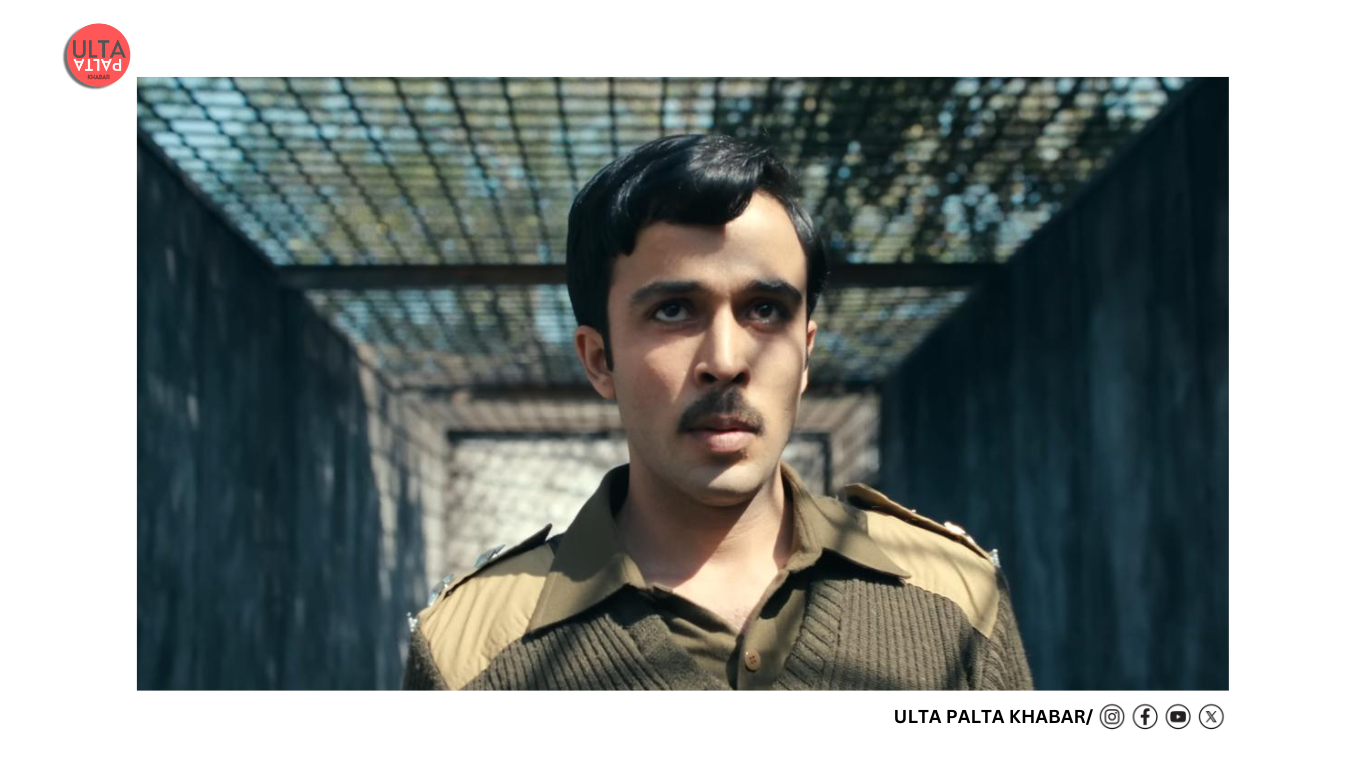
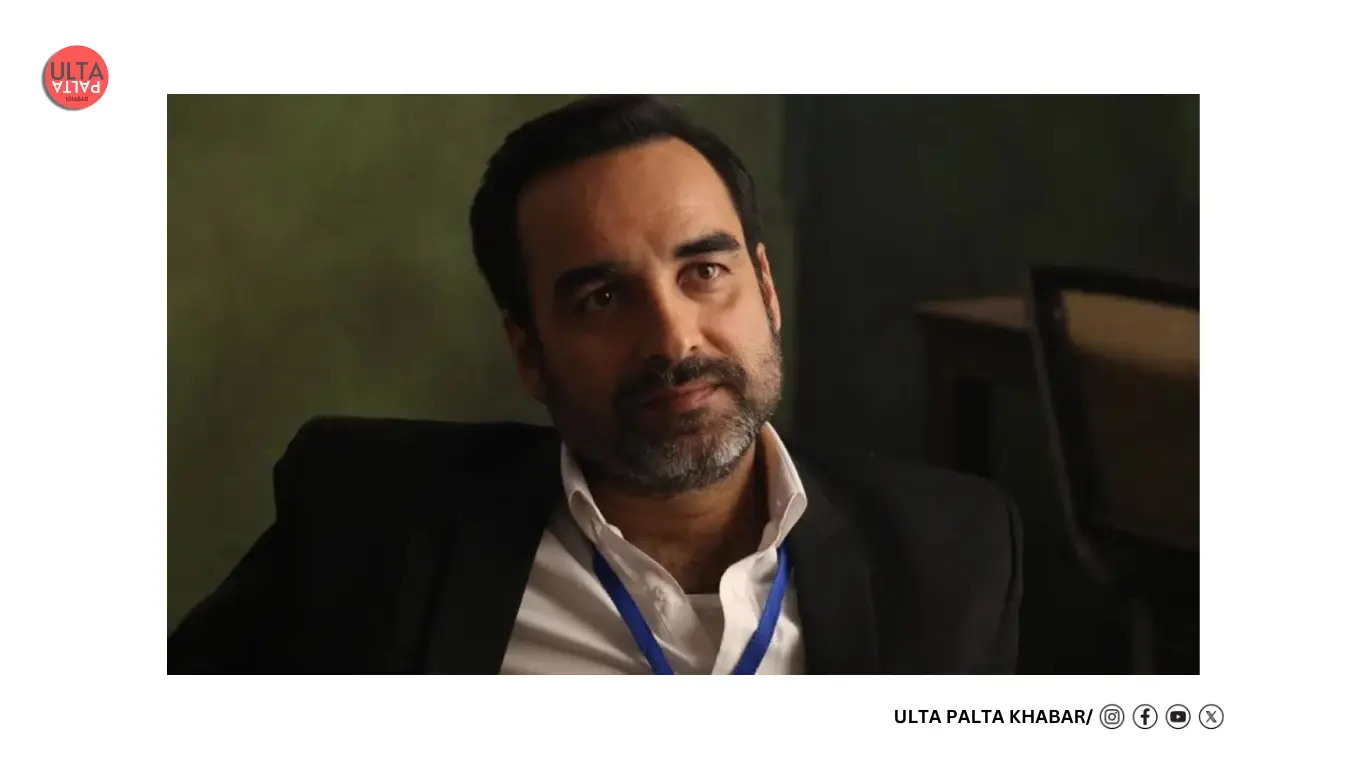

After years of fighting for opportunities and building a successful career, the National Award-winning actor says money and awards are no longer his biggest motivations. Pankaj Tripathi now wants stories that excite him, challenge his craft and offer artistic satisfaction.
Bollywood has a new reminder that not everything revolves around money, and it comes from one of the industry’s most respected performers, Pankaj Tripathi. The actor, who has spent years transforming himself from a struggling theatre artist into one of India’s most recognisable acting talents, has revealed that hefty paycheques no longer influence his film choices. In fact, he is now comfortable turning down projects even when filmmakers approach him with attractive financial offers.
Note: For optimal viewing on mobile devices, rotate the screen.
In a candid conversation with Hindustan Times, the 50-year-old actor opened up about how his understanding of success has changed over the years. For someone who once considered getting a film offer and earning enough to fulfil basic dreams a major achievement, the priorities have now shifted towards creative satisfaction, meaningful storytelling and the simple joy of performing.
And his statement is particularly interesting at a time when Bollywood’s star system is increasingly associated with massive remuneration, box-office targets, franchise films and commercial calculations.
Note: For optimal viewing on mobile devices, rotate the screen.
Pankaj summed up his new approach with a rather straightforward statement: “Bina excitement ke mujhse koi film hoti nahi hai.” In other words, if a project does not excite him, he simply cannot bring himself to do it.
‘Cheques Don’t Excite Me Anymore’: Pankaj Tripathi’s New Rule for Signing Films
The actor explained that financial offers are no longer enough to convince him to become part of a project. What matters is whether the story gives him something interesting to explore as an actor.
He said that regardless of how much money someone offers, a cheque cannot create the excitement he needs to accept a film. He wants a story that makes him think, ‘Yes, this will be fun to do,’ or a subject that contains something meaningful that he can give back to society.
This is a significant change from the mindset he had during his early years in the industry. Pankaj acknowledges that he has reached a stage where artistic satisfaction matters more than financial motivation.
However, refusing a film is not always emotionally easy for him. The actor admitted that he sometimes thinks about the people approaching him and the hopes they have attached to their projects. A filmmaker might have invested considerable time and effort in developing a story, and declining the offer can feel uncomfortable.
Nevertheless, he believes that accepting a project without genuine enthusiasm would be unfair to both himself and the filmmaker.
His position is simple: if he cannot feel excited about the story, how can he deliver an honest performance when the cameras start rolling?
From Financial Survival to Artistic Satisfaction: How Pankaj’s Priorities Changed
Pankaj’s comments also offer an interesting glimpse into the difficult journey that shaped his career.
Unlike actors who enter the film industry with immediate access to major opportunities, Pankaj spent years working towards recognition. His early journey involved theatre, auditions, smaller roles and the struggle to establish himself in an industry where opportunities can be difficult to secure.
The actor has been active in films for more than two decades, and he understands how different his motivations were when he was trying to build a career.
Looking back, he recalled that getting work and receiving payment were once sufficient reasons to accept a project. Even the possibility of purchasing something as ordinary as a car could become a strong motivation.
He described that period as his ‘survival phase’.
During those years, financial stability was important, and every opportunity represented a step towards achieving a better life. A film offer meant income, experience and another chance to move forward professionally.
But the situation is different today.
Pankaj explained that once survival is no longer the primary concern, an artist needs something more meaningful to remain motivated. That is where artistic satisfaction enters the picture.
His remarks are not necessarily a rejection of commercial cinema or money. Instead, they reflect a desire to maintain control over the kind of work he associates himself with.
For an actor who has already experienced the uncertainty of the industry, having the freedom to choose projects based on creative interest is arguably one of the biggest rewards of a successful career.
Pankaj Tripathi Has Found a New Way to Say No to Filmmakers
Interestingly, Pankaj also revealed that his earlier method of rejecting film offers no longer worked.
In the past, he would sometimes tell filmmakers that his dates were unavailable for the next year or even a year and a half. However, determined filmmakers would simply offer to wait until his schedule became free.
That meant his excuse did not always solve the problem.
Now, the actor prefers to be honest while declining projects. Rather than inventing scheduling difficulties, he politely explains that the material does not excite him enough to commit to it.
This approach reflects a more confident understanding of his professional boundaries.
It also sends a message to filmmakers that casting a recognised actor is not simply about arranging dates or offering attractive remuneration. The story itself needs to convince the performer.
For the industry, this could mean that established actors increasingly become selective about the projects they take on, particularly when they have already achieved financial security and professional recognition.
Why This Could Change Pankaj Tripathi’s Bollywood Career
Pankaj’s new philosophy could have an interesting impact on the next phase of his career.
First, audiences may see him prioritising distinctive characters and unusual storytelling over simply appearing in multiple commercial projects. His strength has always been his ability to make characters feel believable, whether he is playing a complicated gangster, an ordinary middle-class man, a police officer or a comic personality.
Second, his decisions could give emerging filmmakers a better opportunity to approach him with unconventional scripts. If a story offers something genuinely fresh, it may attract his attention even if it does not come with the financial backing of a massive commercial production.
Third, his selective approach could also help protect his screen identity. Actors who appear in too many similar roles sometimes risk audience fatigue. Choosing projects carefully allows performers to preserve their individuality and avoid becoming predictable.
Of course, this does not guarantee that every film he chooses will become a commercial success. Creative satisfaction and box-office performance are two different things. But for Pankaj, the priority appears to be making work that he can genuinely enjoy and take pride in.
His approach also challenges the popular assumption that an actor’s career progression must always involve bigger fees, larger productions and more awards.
From Kaleen Bhaiya to Romantic Comedy: Pankaj’s Latest Projects
The actor’s current professional phase offers an interesting example of his willingness to explore different kinds of storytelling.
Pankaj is enjoying the success of Mirzapur: The Movie, which brought the popular crime franchise to the big screen. Reprising his much-loved character Kaleen Bhaiya, he once again found himself at the centre of a story filled with power struggles, violence and political ambition.
The film delivered a substantial theatrical performance, with reported worldwide collections reaching over ₹336 crore according to box-office tracking reports, while some industry coverage has described its worldwide business as exceeding ₹350 crore.
However, Pankaj’s latest project takes him in a completely different direction.
He has joined Aditi Rao Hydari for Parivarik ManuRanjan, a romantic comedy that premiered on Sony LIV on November 13, 2026. Directed by Varun V Sharma, the film marks the first on-screen collaboration between the two actors.
Pankaj plays Ranjan Dubey, a middle-aged bachelor whose otherwise ordinary life takes an unexpected turn when a housekeeper enters his world.
The actor revealed that he was drawn to the project because of its simplicity and relatable characters. He liked the fact that the story did not depend on unnecessary gimmicks or dramatic attempts to shock viewers.
He reportedly read the script at night and contacted the makers the following morning to confirm his interest.
That decision is particularly revealing when viewed alongside his latest comments about money. Here was a project that attracted him because of the story itself, not simply because of its commercial potential.
The film also gives audiences an opportunity to see Pankaj in a romantic-comedy setting, a space that is different from the intense crime dramas and grounded character roles with which he is frequently associated.
Will Pankaj Tripathi Become More Selective Than Ever?
Pankaj’s comments suggest that the coming years could bring a more carefully curated filmography.
Rather than chasing every big banner or high-paying opportunity, he appears interested in finding projects that offer emotional depth, entertainment value or something socially meaningful.
This could also benefit the wider industry. Established actors who are willing to experiment can help bring attention to smaller stories that might otherwise struggle to attract audiences.
At the same time, his philosophy does not mean that commercial films are off his list. If a mainstream entertainer excites him creatively, there is no reason he would reject it simply because it is commercial.
Ultimately, the deciding factor is the story.
For fans, this could mean fewer appearances but potentially more interesting performances. And for filmmakers, the message is clear: bringing Pankaj Tripathi on board may require more than an impressive cheque.
After spending years proving his talent and earning his place in Bollywood, the actor now seems to be enjoying something even more valuable — the freedom to choose what he wants to do.
Perhaps that is the real meaning of success for Pankaj Tripathi today. Not the size of the cheque, not the number of awards on the shelf, but the excitement of stepping onto a film set knowing that the story is worth telling.
Note: For optimal viewing on mobile devices, rotate the screen.
You May Like:
- ultapaltakhabar.com/anime-hits-4-45-trillion-yen-japans-cartoon-empire-is-now-a-rs-2-67-lakh-crore-monster-and-the-world-cant-stop-watching/
- https://ultapaltakhabar.com/trai-wants-a-licence-for-your-free-streaming-tv-what-the-new-rules-mean-for-fast-apps-smart-tvs-and-your-remote/
- ultapaltakhabar.com/netflixs-big-korea-bet-pays-off-squid-game-song-hye-kyo-and-gong-yoo-lead-k-content-push-amid-layoffs-and-leadership-shake-up/
- ultapaltakhabar.com/hollywoods-biggest-agencies-join-forces-against-netflix-disney-and-prime-video-american-entertainment-alliance-demands-50-budget-for-indie-productions/




 By