
The court has declined to grant Phantom Studios an interim injunction against Queen Forever, but the dispute over sequel rights, intellectual property ownership and alleged contractual violations remains unresolved.
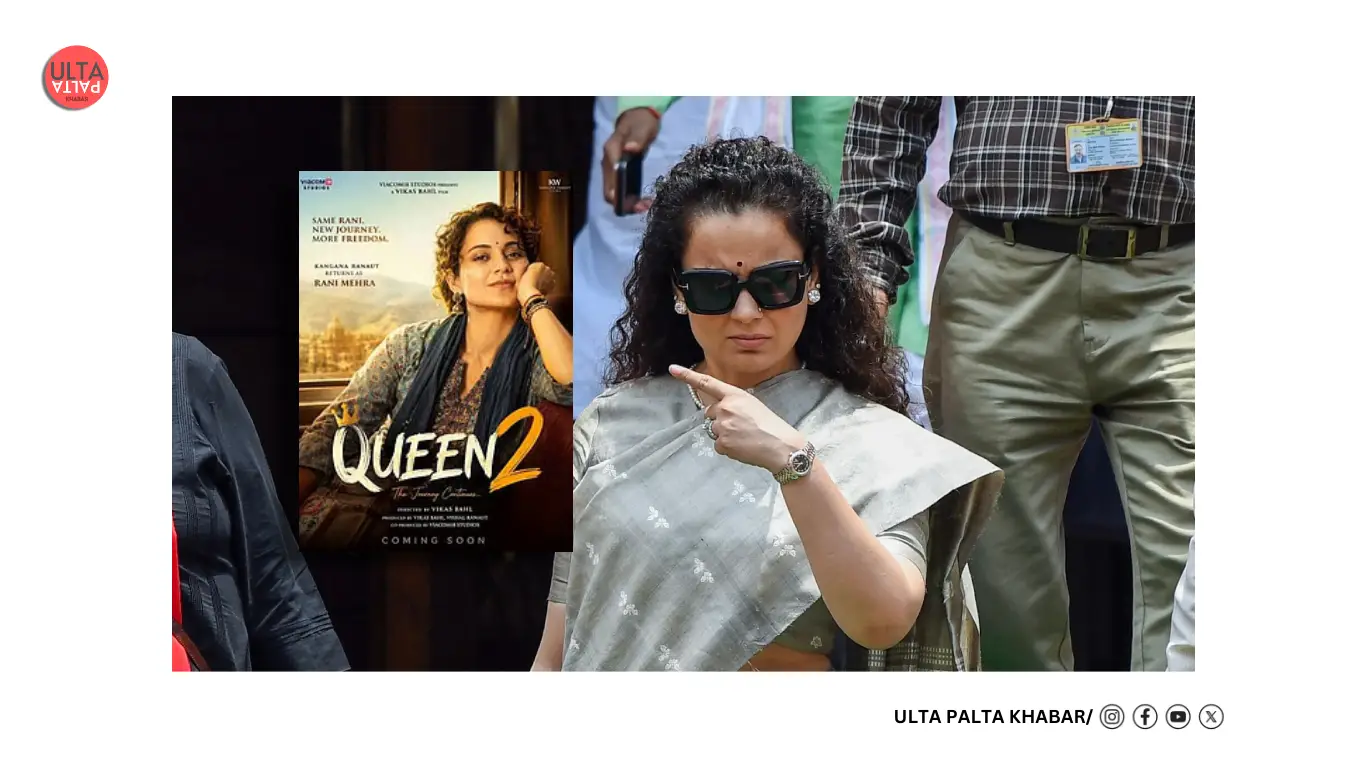
Kangana Ranaut’s much-awaited return to the world of Queen has hit a legal twist, but the film has received some breathing room. The Bombay High Court on Wednesday, October 14, refused to grant an interim injunction against Queen Forever, the upcoming film being produced by JioStar India Pvt Ltd, after Phantom Studios India Pvt Ltd challenged its production and proposed release.
Note: For optimal viewing on mobile devices, rotate the screen.
The legal battle revolves around one big question: who has the right to decide the future of the 2014 hit Queen and create another film based on its intellectual property?
Phantom Studios, which co-produced the original film, claims that it jointly owns 50% of the intellectual property rights, including the rights to develop sequels, prequels, remakes and other derivative works. The studio alleges that Queen Forever is being made without its consent and has sought ₹250 crore in damages.
However, the court’s latest decision means that Phantom Studios has not secured the immediate restraint it wanted against the project. The ruling does not, by itself, settle the underlying ownership dispute or establish whether the sequel violates the parties’ agreements.
Note: For optimal viewing on mobile devices, rotate the screen.
For Kangana and the team behind Queen Forever, the development removes one immediate obstacle. For Phantom Studios, the fight over the rights to the franchise is far from over.
Why Has Phantom Studios Challenged Queen Forever?
The controversy stems from the agreements governing the original Queen, which starred Kangana Ranaut as Rani, a young woman who travels alone to Europe after her wedding is called off.
Released in 2014, the Vikas Bahl-directed film became a major critical and commercial success. Its story of self-discovery, independence and personal growth connected with audiences, while Kangana’s performance earned widespread recognition.
According to Phantom Studios’ lawsuit, the co-production agreement between the parties expressly provided for joint and equal ownership of the film’s intellectual property, including derivative rights. The studio argues that those rights extend to sequels, prequels, remakes, adaptations and projects based on the original film’s characters, story or other elements.
Phantom maintains that it never granted permission for the proposed sequel and that JioStar could not unilaterally proceed with a new project falling within the scope of their shared rights.
The studio says it issued several caution notices to JioStar beginning in April 2026, asking the company to stop plans for a sequel or other content that could create an association with Queen. According to the lawsuit, the studio’s concerns were not resolved, prompting it to approach the court.
The disagreement has now developed into a substantial commercial dispute involving the control and potential value of a successful film franchise.
Bombay High Court Refuses Interim Injunction
Phantom Studios approached the Bombay High Court seeking urgent temporary relief to prevent the production, completion, release, distribution, streaming, marketing and promotion of Queen Forever, also referred to as Queen 2, without its prior written consent.
The application was heard by a single-judge bench of Justice Sandeep Marne, which declined to grant the requested interim injunction on October 14.
The decision is significant because an injunction could have disrupted the project’s progress and created uncertainty around its release plans. By refusing that immediate relief, the court has not imposed the restraint Phantom Studios was seeking at this stage.
However, there is an important legal distinction between refusing an interim injunction and finally deciding a lawsuit.
An interim injunction is a temporary measure sought while a case remains pending. Its refusal does not automatically establish that the defendant has acted lawfully in every respect, nor does it conclusively determine ownership of disputed intellectual property.
The central questions concerning the agreements, the scope of the rights held by each party and the nature of the new film remain matters for the legal proceedings.
The latest development should therefore be viewed as an important procedural outcome rather than a final victory for either side.
The ₹250 Crore Question: What Is at Stake?
The financial dimension makes the dispute particularly noteworthy.
Phantom Studios has sought ₹250 crore in damages from JioStar, alleging that the production of Queen Forever breaches the contractual and intellectual property arrangements governing the original film.
The claim reflects the importance of sequel rights in an industry where established films can continue to generate value long after their original theatrical releases.
A successful film can create a valuable collection of intellectual property, including characters, story elements, titles and other rights, depending on the relevant agreements and applicable law. The ability to develop sequels or adaptations can represent a significant commercial opportunity for rights holders.
If the parties disagree over who controls those rights, the consequences can extend beyond a single production. The dispute may affect the exploitation of the franchise, future projects, distribution arrangements and negotiations with other commercial partners.
Nevertheless, the ₹250 crore figure is Phantom Studios’ claim for damages, not an amount awarded by the court. The eventual financial consequences will depend on the proceedings and any final determination or settlement.
JioStar’s Position: Is Queen Forever Really a Sequel?
The dispute also raises a question about the relationship between the upcoming film and the original Queen.
Phantom Studios argues that the new project falls within the category of sequels or derivative works covered by the parties’ agreements. JioStar, meanwhile, has disputed the allegation, maintaining that the new film is not a continuation of the original in the manner alleged by Phantom Studios.
That disagreement matters because the legal assessment may depend on the actual terms of the contracts and the nature of the project, rather than the title alone.
Simply calling a film a sequel does not resolve every question about intellectual property ownership. Conversely, describing a project differently would not automatically remove contractual obligations if its substance falls within rights covered by an agreement.
The precise scope of the parties’ rights, and how those rights apply to Queen Forever, will therefore remain central to the dispute.
For now, the refusal to grant interim relief should not be interpreted as a final judicial endorsement of either party’s interpretation of the agreements.
What Does This Mean for Kangana Ranaut’s Queen Forever?
Kangana Ranaut is returning to the Queen universe for the upcoming project, which has generated interest because of the original film’s enduring popularity.
The legal dispute introduces uncertainty around a project that carries the expectations associated with a recognised title. However, the court’s latest decision means that Phantom Studios has not obtained the temporary restraint it requested against the film’s production and release.
That gives the project room to move forward for now, subject to any further developments in the litigation or other legal proceedings.
For the filmmakers, the situation highlights the importance of resolving rights-related questions when developing projects connected to an established property. Even a film with a recognisable title and returning lead actor can face substantial complications if the parties disagree over contractual permissions.
For audiences, the immediate question is whether the legal proceedings will affect the eventual release schedule. No definite conclusion about a delay or cancellation should be drawn solely from the ongoing dispute.
The outcome could also influence how production companies approach future collaborations, particularly when original films have multiple producers and agreements covering sequels or adaptations.
Why This Case Could Matter Beyond One Film
The Queen Forever dispute highlights a broader issue in the entertainment business: the value of intellectual property is not limited to the original theatrical release.
As successful films become potential franchises, rights to sequels, remakes and derivative projects can become commercially significant. Clear contractual arrangements can help producers understand who may approve future projects, how profits and responsibilities are divided, and what happens when one party wishes to move ahead independently.
When disagreements arise, they can affect financing, production schedules, distribution planning and negotiations with streaming platforms.
The case also illustrates why the wording of co-production agreements matters. Parties may agree to share ownership of a film, but the precise scope of derivative rights and the procedures for approving future projects can become the subject of litigation if their interpretations differ.
The eventual resolution of the dispute may provide further clarity for the parties involved, although its broader implications will depend on the court’s findings and the specific contractual terms under consideration.
What Happens Next?
The immediate development is clear: the Bombay High Court has refused Phantom Studios’ request for an interim injunction against Queen Forever. But the underlying commercial suit remains a separate matter.
The next stage will depend on how the litigation progresses, what arguments and evidence the parties present, and whether they reach an agreement before a final determination.
A settlement could potentially resolve the commercial disagreement without a prolonged legal battle. If the dispute continues, the court may ultimately have to address the competing claims concerning contractual obligations and intellectual property rights.
Until then, the project remains surrounded by questions about its legal position and future release plans.
The Final Word
Queen Forever has avoided the immediate restraint sought by Phantom Studios, but the legal controversy surrounding Kangana Ranaut’s return to the franchise is not over.
The studio’s ₹250 crore damages claim and its assertion of joint ownership of the original film’s derivative rights place the dispute at the intersection of cinema, contracts and commercial intellectual property.
The court’s refusal to grant interim relief is an important development for the upcoming film, but it should not be mistaken for a final ruling on the parties’ competing claims.
For Bollywood, the case is another reminder that the success of a film can create valuable opportunities for future storytelling—and that the rights governing those opportunities can become just as consequential as the film itself.
Note: For optimal viewing on mobile devices, rotate the screen.
You May Like:
- ultapaltakhabar.com/hanuman-ansh-misses-oscar-deadline-inr-2-crore-film-crosses-inr-205-crore-as-makers-reveal-why-indias-official-entry-dream-was-lost/
- ultapaltakhabar.com/tamil-cinema-faces-september-shutdown-no-new-tamil-film-releases-from-september-1-as-producers-clash-with-theatre-owners-over-8-week-ott-rule/
- https://ultapaltakhabar.com/cinemark-backs-111-billion-paramount-warner-bros-merger-as-all-major-u-s-theater-chains-line-up-behind-david-ellison/
- ultapaltakhabar.com/oscars-2027-budget-youtube-move-and-ai-debate-academy-reveals-its-big-plans-for-hollywoods-future/




 By
By