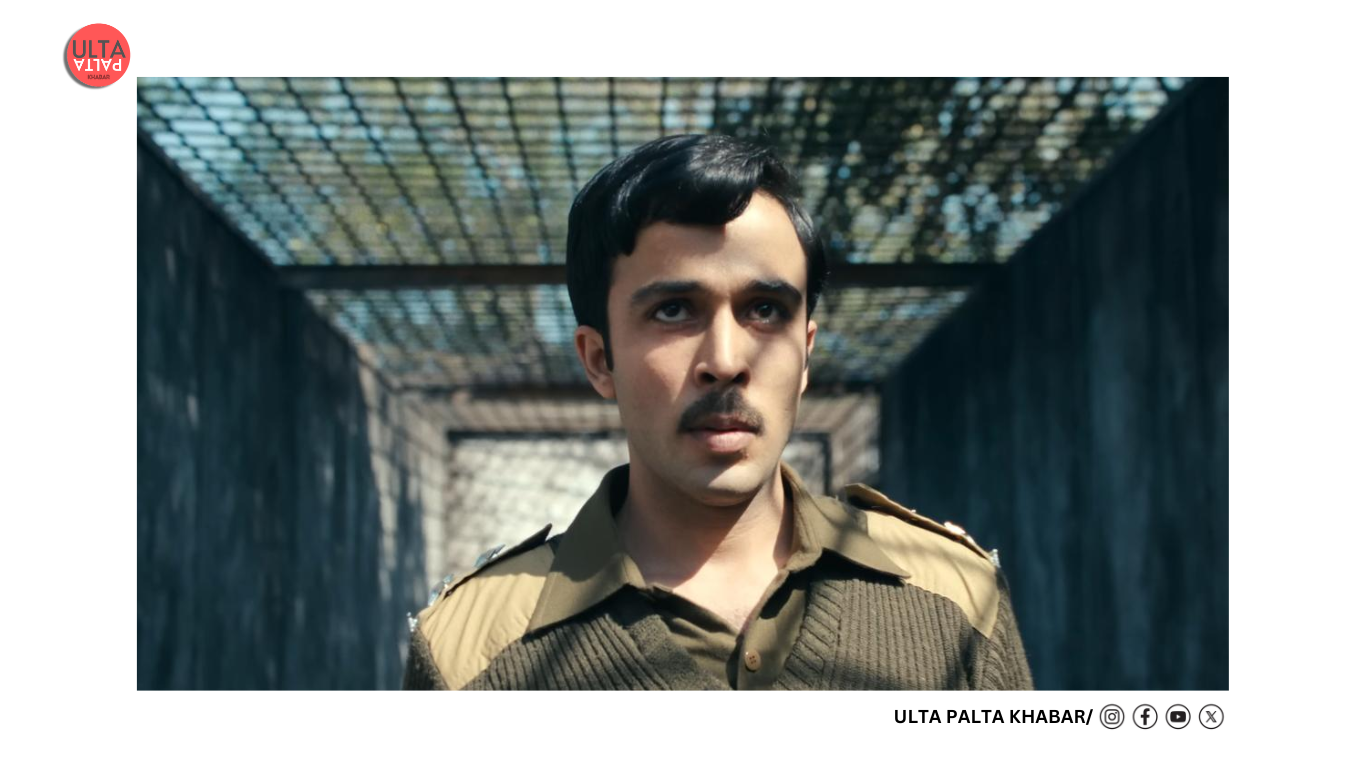
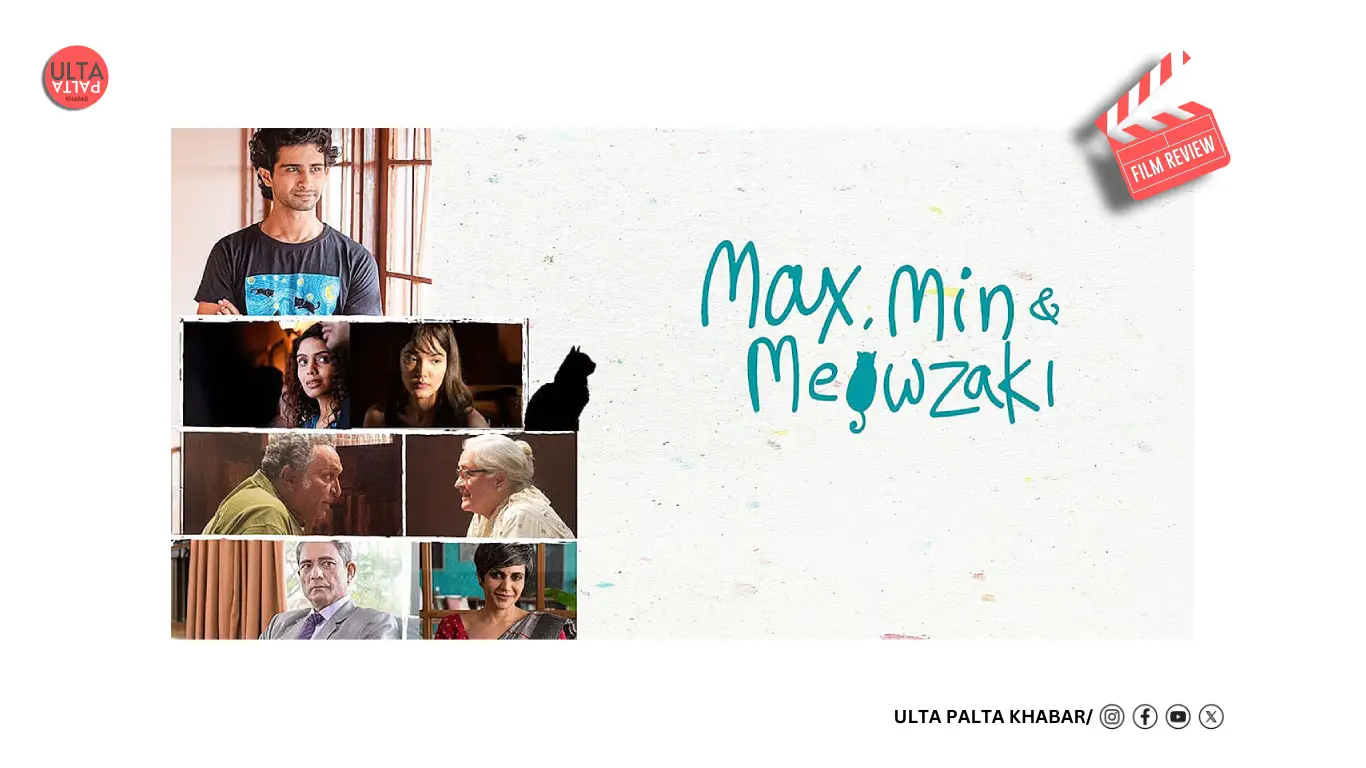

Siddharth Menon, Medha Shankr, Adil Hussain and Nassar deliver heartfelt performances in an emotionally rich coming-of-age drama that explores grief, communal divides and second chances through the most unexpected hero—a rescued cat.
Theatres have recently witnessed an influx of loud commercial spectacles, high-octane action films and franchise entertainers. Amid this cinematic noise arrives Max, Min & Meowzaki, a film that refuses to scream for attention. Instead, it whispers, pauses, observes and gradually wins over audiences willing to embrace its emotional honesty.
Directed by Padmakumar Narasimhamurthy, the slice-of-life drama isn’t merely another relationship film. It is a deeply personal meditation on grief, masculinity, family, healing and acceptance wrapped inside one unusual custody battle over a rescued cat named Meowzaki—a loving tribute to legendary Japanese filmmaker Hayao Miyazaki.
With performances led by Siddharth Menon, Medha Shankr, Adil Hussain, Nassar, Mandira Bedi, Nafisa Ali and Vidhatri Bandi, the film attempts something increasingly rare in modern Indian cinema—it trusts silence more than spectacle.
Note: For optimal viewing on mobile devices, rotate the screen.
A breakup that becomes much bigger than romance
At first glance, the story appears deceptively simple.
Max (Siddharth Menon), a jingle singer still struggling to process the recent death of his mother, finds his relationship with Minara “Min” Hussain (Medha Shankr) falling apart. Like every modern breakup, they begin dividing their belongings.
But one possession changes everything.
Their rescued cat, Meowzaki.
Ironically, Max suffers from severe allergies to cats, yet insists on keeping Meowzaki. What initially looks like irrational behaviour slowly transforms into one of the film’s most beautiful metaphors. Sometimes healing demands embracing exactly what makes us uncomfortable.
This unusual emotional conflict gives the narrative its identity while setting the stage for three generations of men confronting years of unresolved pain.
Note: For optimal viewing on mobile devices, rotate the screen.
Three generations, three emotional prisons
One of the strongest aspects of Max, Min & Meowzaki lies in how it portrays masculinity without resorting to clichés.
Max struggles with heartbreak and emotional uncertainty.
His father, Ramesh (Adil Hussain), quietly drowns beneath insomnia, grief and conservative social conditioning after losing his wife.
Grandfather Sridhar (Nassar), an ageing Carnatic musician, carries decades of regret for failing his own son while slowly watching memory fade around him.
Each man represents a different generation raised under different circumstances, yet all share one common weakness—they simply don’t know how to communicate their emotions.
Rather than creating dramatic confrontations, director Padmakumar lets these emotional fractures unfold naturally through therapy sessions, ordinary conversations and everyday interactions.
The result feels remarkably authentic.
Meowzaki becomes the emotional heartbeat
Many filmmakers use pets merely for comic relief or emotional manipulation.
Here, Meowzaki serves an entirely different purpose.
The cat becomes the emotional bridge connecting fractured relationships.
Max learns compassion despite physical discomfort.
Ramesh slowly questions his lifelong prejudices.
Sridhar rediscovers companionship during his final years.
Even secondary characters begin confronting emotional wounds because of this unlikely catalyst.
Instead of making the animal a gimmick, the screenplay transforms Meowzaki into a living symbol of empathy, acceptance and emotional vulnerability.
It is one of the film’s smartest storytelling decisions.
Adil Hussain steals every scene
While Siddharth Menon delivers an understated and sincere performance as Max, the emotional centre of the film belongs to Adil Hussain.
Playing Ramesh could easily have become another stereotypical conservative father trapped inside familiar cinematic tropes.
Instead, Adil humanises him.
His anger never feels theatrical.
His prejudice never feels cartoonish.
His loneliness quietly overwhelms every frame.
Watching Ramesh slowly lower his emotional walls through therapy becomes one of the film’s most rewarding experiences. Rather than asking audiences to excuse his flaws, the film encourages viewers to understand where they originated.
It is nuanced writing elevated further by an exceptional performance.
Medha Shankr continues her impressive rise
Following her growing popularity in recent years, Medha Shankr once again proves why filmmakers continue trusting her with emotionally grounded characters.
Although Min doesn’t receive as much narrative depth as Max, Medha brings warmth, grace and realism to every scene she appears in.
She avoids melodrama completely, making Min feel like someone audiences may actually know.
Her chemistry with Siddharth Menon remains believable even after the relationship collapses, helping audiences remain emotionally invested throughout.
The film tackles difficult conversations without shouting
One of the biggest surprises is how comfortably the screenplay navigates multiple social themes simultaneously.
Rather than delivering preachy speeches, the narrative naturally explores:
- Communal prejudice
- Domestic violence
- Dementia
- Mental health
- Therapy
- Generational trauma
- Homosexuality
- Patriarchal expectations
- Emotional suppression among men
Most importantly, none of these issues exist merely for headlines.
They emerge organically from the characters themselves.
In today’s increasingly polarised environment, Max, Min & Meowzaki reminds viewers that empathy often begins with listening rather than debating.
That subtle approach becomes one of the film’s greatest strengths.
Beautiful music, thoughtful visuals—but a slightly overstretched runtime
Technically, the film succeeds in creating a soothing atmosphere.
Its gentle monsoon setting beautifully complements the emotional tone.
The soundtrack blends contemporary rock influences with classical Indian music, producing melodies that linger long after the credits roll.
However, the film’s biggest weakness arrives during its final act.
At 138 minutes, certain subplots begin overstaying their welcome.
Some supporting characters disappear without satisfying closure.
Female perspectives also feel comparatively underdeveloped, often existing primarily to trigger emotional growth for male protagonists.
While these shortcomings don’t derail the experience, trimming fifteen to twenty minutes could have made the narrative significantly sharper.
Why this film could become a sleeper success
Commercially, Max, Min & Meowzaki may not generate blockbuster opening numbers.
Its strength lies elsewhere.
Word-of-mouth.
Audiences increasingly seek emotionally meaningful cinema that offers something beyond action sequences and franchise storytelling.
Recent theatrical successes have already demonstrated that content-driven films can find dedicated audiences through positive reviews and social media conversations.
If viewers connect with its emotional honesty, Max, Min & Meowzaki has the potential to enjoy a long theatrical run before becoming a major favourite on OTT platforms.
Its universal themes of grief, family and healing possess strong repeat-viewing value.
What this means for Indian cinema
The success—or even critical appreciation—of films like Max, Min & Meowzaki sends an important message to filmmakers.
Not every emotional drama requires exaggerated melodrama.
Not every social issue needs loud political messaging.
Sometimes, intimate storytelling leaves the deepest impact.
The film also reinforces the growing confidence among independent Indian filmmakers to experiment with unconventional narratives while trusting audiences to appreciate quieter cinema.
As OTT platforms continue expanding globally, emotionally layered Indian stories like this could attract significant international appreciation.
Final Verdict
Max, Min & Meowzaki isn’t perfect.
Its pacing occasionally slows, certain characters deserved richer development, and the screenplay sometimes becomes overly eager to address contemporary social issues.
Yet beneath those imperfections lies a remarkably compassionate film.
It reminds us that grief never truly disappears.
Love doesn’t always end when relationships do.
Families heal slowly.
And sometimes, the smallest companions help carry the heaviest emotional burdens.
In a cinematic landscape overflowing with explosions, conspiracies and superheroes, Max, Min & Meowzaki quietly proves that vulnerability may still be cinema’s greatest superpower.
Ulta Palta Khabar Rating: ⭐⭐⭐⭐☆ (4/5)
One-Line Verdict: A heartfelt, emotionally intelligent drama that transforms an unlikely cat custody battle into one of the year’s most touching cinematic experiences.
Note: For optimal viewing on mobile devices, rotate the screen.
You May Like:
- ultapaltakhabar.com/dharman-rajinikanth-becomes-the-deadly-doctor-as-kamal-haasans-dream-project-finally-takes-shape-after-years-of-delays/
- ultapaltakhabar.com/bts-leader-rm-creates-history-kim-namjoon-becomes-first-ever-global-ambassador-of-national-museum-of-korea-army-celebrates-another-iconic-milestone/
- https://ultapaltakhabar.com/south-korean-box-office-colony-dominates-again-as-spielbergs-disclosure-day-opens-strong-korean-cinema-faces-new-challenge/
- ultapaltakhabar.com/ranveer-singh-gets-massive-relief-as-fwice-revokes-boycott-poonam-dhillon-reveals-actors-father-personally-thanked-her/

 By
By