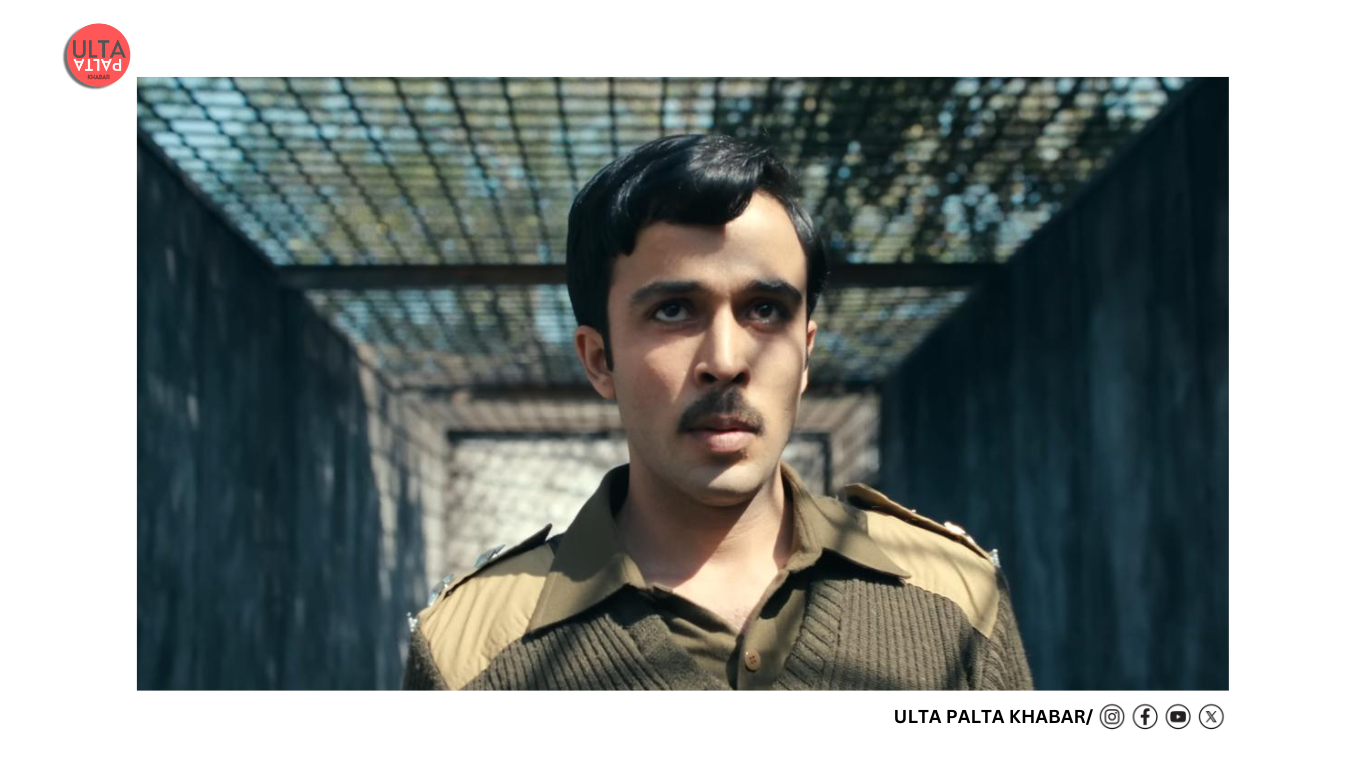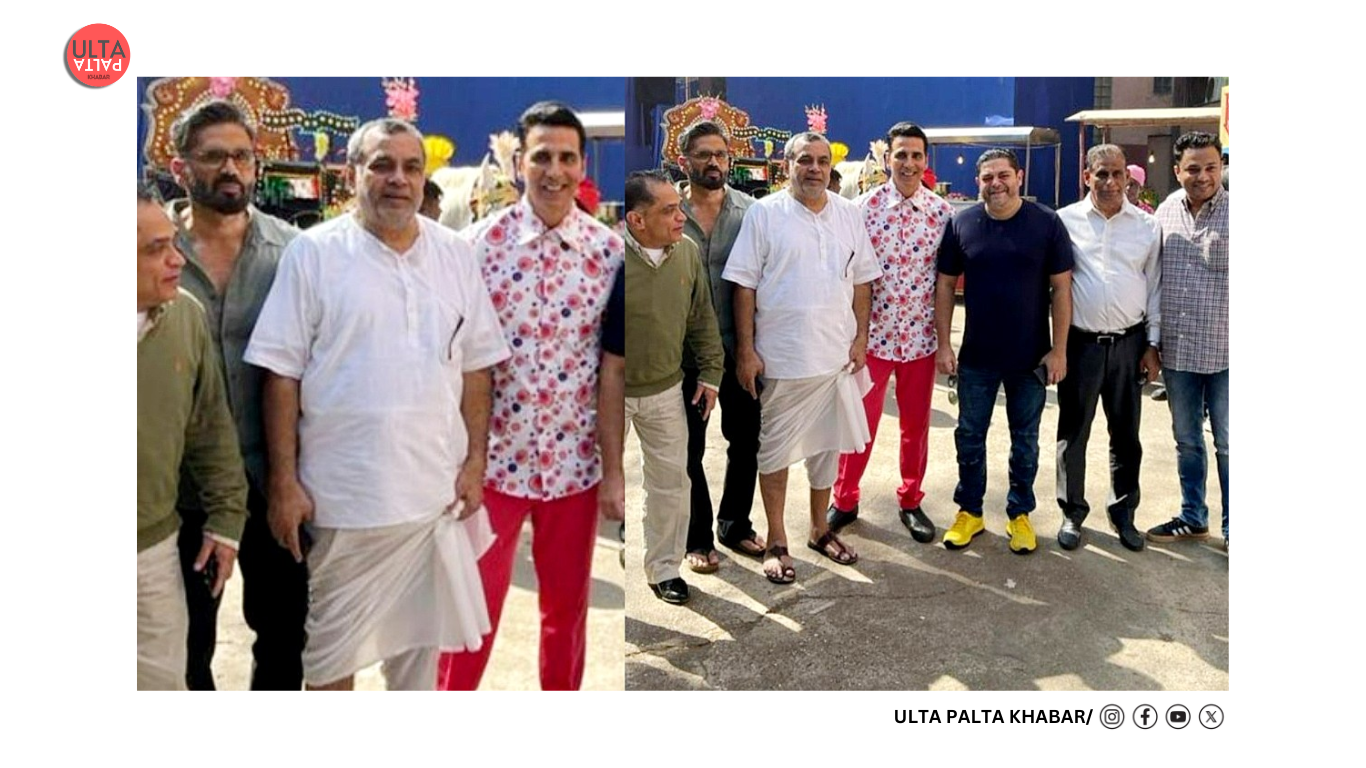


Ayan Mukerji opens up about the financial hurdles behind Brahmastra: Part Two – Dev, admitting that the first film needed to prove itself before producers could invest in the ambitious fantasy franchise.
The wait for Brahmastra: Part Two – Dev has been frustrating for fans, but director Ayan Mukerji has finally offered a clearer explanation for why the sequel has taken so long to move forward. While the filmmaker had imagined Brahmastra as a multi-part cinematic universe from the beginning, turning that vision into reality required something that even the biggest Bollywood productions cannot take for granted: enormous financial backing.
Note: For optimal viewing on mobile devices, rotate the screen.
Speaking at the 57th International Film Festival of India (IFFI) 2026 in Goa, Ayan discussed the challenges of making large-scale franchise films, explaining why shooting both instalments together was never financially practical for the team behind Brahmastra: Part One – Shiva.
The director also addressed the mixed response to the first film, acknowledging that audience criticism needs to be taken seriously. His comments offer an important insight into the decisions behind one of Bollywood’s most ambitious fantasy franchises and the expectations surrounding its next chapter.
Note: For optimal viewing on mobile devices, rotate the screen.
For fans waiting to discover the story of Dev, the message is clear: the sequel is not simply about continuing a successful film. It is about building a stronger cinematic experience while managing the enormous costs associated with creating an entirely fictional world.
Why Brahmastra 2 Was Not Filmed Alongside Part One
Ayan revealed that the team had always imagined a larger story extending beyond Shiva’s journey. However, having a multi-film vision does not necessarily mean that producers can finance every instalment simultaneously.
The filmmaker explained that producing two large-scale films together requires considerable financial resources. Unless a production house has exceptionally deep pockets, committing to an entire franchise before seeing how its first instalment performs can be a major commercial risk.
He pointed to other major Indian franchises to explain the approach, mentioning Baahubali 2 and Ramayana 2 as examples of projects where the complete follow-up was not necessarily produced alongside the first instalment.
Discussing the financial realities, Ayan said, “Most of the time, unless the producers have deep pockets, it is hard to fully make Part 2 of a big film. Most people would wait and see how Part 1 goes.”
He also explained that the situation was similar with Brahmastra. The filmmakers had the larger story in mind, but they could not afford to shoot the sequel at the same time as the first film.
“For us on Brahmastra, we couldn’t have afforded to make Brahmastra 2 along with Part 1. We had it in our minds, but we definitely needed Part 1 to take that step,” he said.
This admission highlights a major reality of modern franchise filmmaking. A director may have a complete creative vision, but the production budget, commercial confidence and financial commitments ultimately determine how quickly the next chapter can be made.
Brahmastra Part One’s Mixed Response Changed the Conversation
Released in September 2022, Brahmastra: Part One – Shiva starred Ranbir Kapoor as Shiva and Alia Bhatt as Isha. The film introduced audiences to the Astraverse, a fantasy world built around ancient weapons, supernatural powers and mythological references.
The project was mounted on a massive scale, with extensive visual effects, elaborate action sequences and an ambition to create a Hindi film franchise that could potentially compete with international fantasy properties.
The film attracted attention for its visual spectacle and technical ambition. However, its storytelling also became a point of debate.
Some viewers appreciated the attempt to create an original fantasy universe rooted in Indian mythology, while others criticised the dialogue, character development, pacing and romantic elements. The film’s visual effects generated considerable discussion, but its narrative choices did not receive the same level of unanimous appreciation.
Ayan described the audience response as a “slightly rockier landing”, suggesting that the film’s reception was more complicated than the team may have hoped.
That assessment matters because Brahmastra was never intended to be a standalone story. Its first instalment was designed to introduce characters, establish mythology and prepare audiences for a much larger conflict.
When a franchise begins with a mixed response, the next instalment faces a difficult challenge. It must satisfy existing fans while also addressing the concerns of viewers who were not completely convinced by the first film.
Ayan Mukerji Admits Audience Criticism Must Be Taken Seriously
Perhaps the most significant part of Ayan’s IFFI conversation was his response to criticism of the first film.
Rather than dismissing negative reactions, the filmmaker acknowledged that audiences have the final say when it comes to how a film is received.
“I don’t think the audience fails the film; they are always king. What they sense in a film, you always have to respect it, even if that doesn’t go in your favour. Our audiences are very smart,” he said.
He further acknowledged that the team needs to improve its storytelling where viewers felt the first film fell short.
This is an important admission for a director working on a sequel that carries considerable expectations. Visual spectacle can attract audiences to theatres, but a compelling emotional journey is what can keep them invested in a franchise.
For Brahmastra: Part Two – Dev, the storytelling challenge is particularly interesting. The first film introduced the world and its central mythology, but the sequel is expected to explore a darker and potentially more intense chapter of the narrative.
If the makers can combine the visual ambition of the original with stronger character development and a more engaging screenplay, the sequel could address some of the biggest criticisms levelled against Part One.
What Can Audiences Expect From Brahmastra: Part Two – Dev?
The next instalment is titled Brahmastra: Part Two – Dev and is expected to expand the mythology introduced in the first film.
The character of Dev was teased towards the end of Brahmastra: Part One – Shiva, creating curiosity about the identity, history and powers of the mysterious figure. The sequel is expected to explore his connection with the larger Astraverse and the events that shaped the conflict introduced in the first chapter.
The first film also established the connection between Shiva and Isha, while introducing the idea that the Astras are connected to powerful forces and ancient traditions. The sequel has an opportunity to take this mythology further and provide answers to questions that were deliberately left unresolved.
However, the makers have not officially confirmed the complete cast, storyline or final production schedule. Speculation surrounding the characters and possible casting choices should therefore be treated cautiously until an official announcement is made.
The sequel’s success will depend on how effectively Ayan balances mythology, action, emotional stakes and the larger franchise narrative.
The Financial Risk Behind Bollywood’s Big-Budget Franchises
Ayan’s comments also reveal why the business of making franchise films has become increasingly complicated.
Large-scale fantasy projects require substantial investment in visual effects, production design, costumes, action choreography and post-production. Unlike smaller films, where much of the storytelling can be achieved through performances and locations, fantasy films often require entire worlds to be created digitally.
Producing multiple instalments together can reduce certain production inefficiencies, but it also increases the financial exposure for producers. If the first film does not perform as expected, the production house could be left carrying the cost of an expensive sequel.
Waiting for the first film’s performance allows producers to assess audience interest, box-office returns and the commercial potential of the franchise before committing further resources.
For Brahmastra, this approach meant that the sequel could not simply follow the first film immediately. The team needed to evaluate the response, reconsider its approach and prepare for the next stage of the story.
Ayan’s explanation also puts the franchise in the larger context of Indian cinema’s growing interest in interconnected stories and multi-film universes. The ambition is enormous, but so are the risks.
Can Brahmastra 2 Give Ayan Mukerji the Franchise Success He Wants?
Ayan Mukerji now faces an important test. The first film introduced an ambitious universe, but the sequel must demonstrate that the concept has the storytelling strength to sustain multiple instalments.
The director’s willingness to acknowledge criticism could be a positive sign. Instead of treating audience feedback as an obstacle, he appears to recognise it as an essential part of developing the next chapter.
For Ranbir Kapoor, the franchise also remains an important part of his filmography, with Shiva’s journey still having significant narrative ground to cover. The character’s evolution and his connection to the Astraverse could become central to the future of the series.
The expectations are high, particularly because audiences have already waited several years for the sequel. A visually impressive film alone may not be enough this time. Viewers will want stronger writing, more memorable characters and meaningful answers to the questions raised in Part One.
Ayan has the advantage of knowing what worked and what did not work in the first instalment. The challenge is translating those lessons into a sequel that feels bigger without losing its emotional core.
For now, the filmmaker has made one thing clear: Brahmastra was always planned as a larger story, but making that story required financial patience and a willingness to listen to audiences.
The real test will come when Brahmastra: Part Two – Dev finally reaches the big screen. Will it turn the Astraverse into the franchise Bollywood hoped for, or will the sequel face the same storytelling questions as its predecessor? That answer could determine the future of Ayan Mukerji’s most ambitious cinematic vision.
Note: For optimal viewing on mobile devices, rotate the screen.
You May Like:
- ultapaltakhabar.com/anime-hits-4-45-trillion-yen-japans-cartoon-empire-is-now-a-rs-2-67-lakh-crore-monster-and-the-world-cant-stop-watching/
- https://ultapaltakhabar.com/trai-wants-a-licence-for-your-free-streaming-tv-what-the-new-rules-mean-for-fast-apps-smart-tvs-and-your-remote/
- ultapaltakhabar.com/netflixs-big-korea-bet-pays-off-squid-game-song-hye-kyo-and-gong-yoo-lead-k-content-push-amid-layoffs-and-leadership-shake-up/
- ultapaltakhabar.com/hollywoods-biggest-agencies-join-forces-against-netflix-disney-and-prime-video-american-entertainment-alliance-demands-50-budget-for-indie-productions/


 By




 By