
As AI-generated fake photos and videos of celebrities raise serious concerns, Pearl Academy dean CB Arun Kumar says platforms must clearly identify AI content, while warning that the technology is also threatening digital artists’ livelihoods.
Artificial intelligence may be transforming filmmaking, visual effects and digital creativity, but its darker side is becoming increasingly difficult for the entertainment industry to ignore. From manipulated celebrity photographs to realistic-looking videos that can fool unsuspecting viewers, AI-generated content is raising uncomfortable questions about consent, identity and accountability. Now, VFX expert CB Arun Kumar has joined the debate, calling for stricter laws that would force social media platforms to display clear and prominent labels on AI-generated images and videos.
Note: For optimal viewing on mobile devices, rotate the screen.
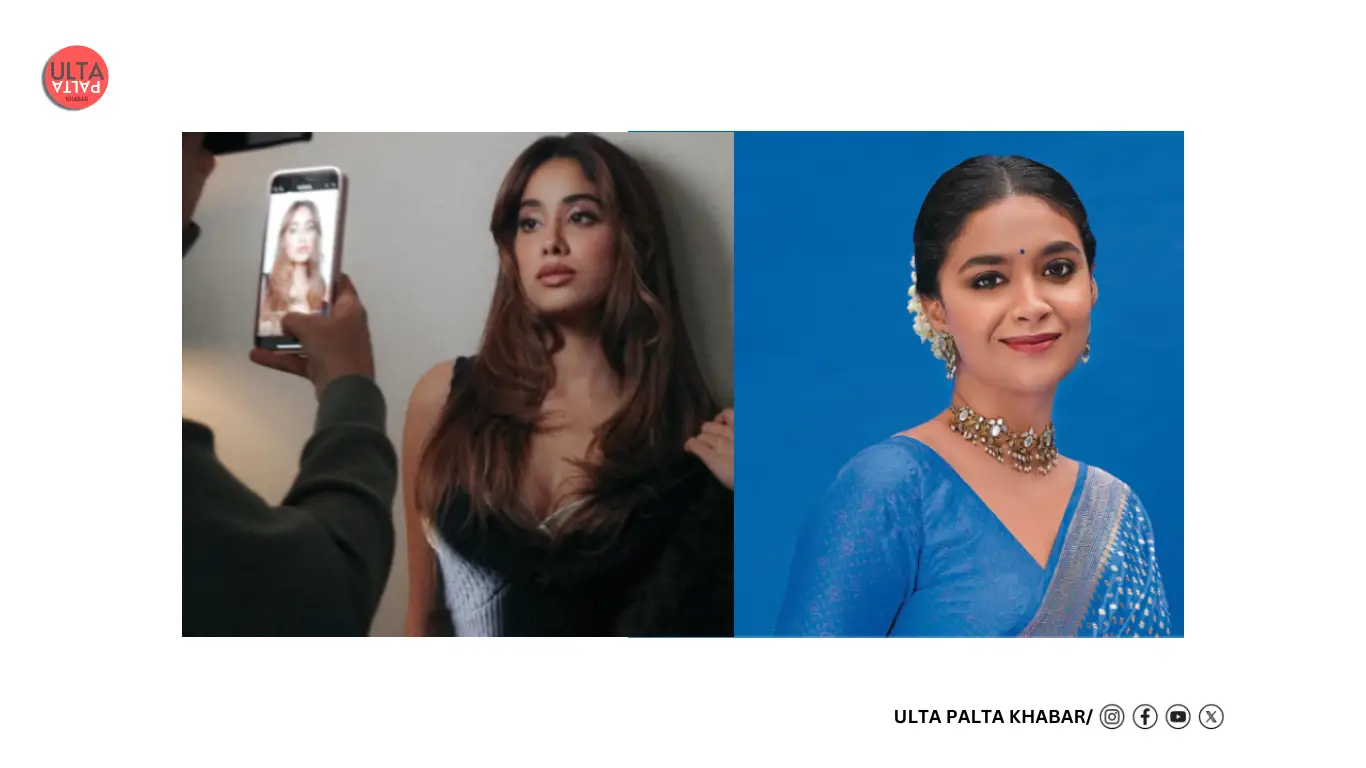
The discussion comes at a time when several actresses, including Janhvi Kapoor and Keerthy Suresh, have spoken out after their photographs and likenesses were allegedly manipulated and circulated online. Their experiences have brought renewed attention to the risks of technology that can make fabricated visuals look frighteningly real.
Speaking exclusively to Hindustan Times, CB Arun Kumar, dean of communication, film and gaming at Pearl Academy, argued that the problem is not artificial intelligence itself but the way people misuse it. He believes social media platforms need to do much more than display small disclaimers that viewers can easily overlook.
Note: For optimal viewing on mobile devices, rotate the screen.
His demand is straightforward: AI-generated content should carry clear, bold labels so audiences can immediately understand whether what they are watching is real or artificially created.
CB Arun Kumar Wants Social Media Platforms to Make AI Labels Impossible to Miss
Arun Kumar believes the existing approach to identifying AI-generated content is not strong enough. He pointed out that even on established platforms such as Instagram, the AI disclaimer can appear in a small and relatively inconspicuous format.
For ordinary users scrolling through hundreds of photographs and videos, such a label may not attract enough attention. That becomes particularly dangerous when fabricated visuals are presented as genuine incidents, news footage or authentic celebrity appearances.
Explaining his concerns, Arun said, “There are already plenty of legal ways to take down that kind of objectionable content. Even on a legal platform like Instagram, the AI content disclaimer is a tiny, hidden message that viewers might not easily see. We need stricter laws that mandate clear, bold labelling of AI content so it can no longer pretend to be news, like some disaster clips that proliferate on the internet. The real problem arises when the audience can no longer tell what’s real and what is fake.”
His argument highlights an important difference between removing harmful content after it has circulated and preventing audiences from being misled in the first place. A takedown may address an individual post, but it cannot always undo the damage caused by a fabricated video that has already been shared widely.
Mandatory and prominent labels could help viewers identify manipulated material before accepting or forwarding it. They could also make it harder for creators to pass off AI-generated scenes as genuine photographs, celebrity appearances or breaking news.
Janhvi Kapoor and Keerthy Suresh’s Experiences Bring the Issue Into Focus
The debate has gained urgency because celebrities are increasingly finding their faces and bodies used in content they never consented to create.
Janhvi Kapoor recently spoke about the misuse of AI to manipulate her visuals from the song Chuttamalle in Devara. In October 2026, she condemned the creation of objectionable AI-altered content involving her likeness and described the issue as part of a much larger problem concerning consent and the treatment of women.
Keerthy Suresh had also spoken about manipulated photographs during the promotion of her film Revolver Rita in November 2025. The actress recalled seeing images of herself in outfits she had never worn and photographs altered in ways that made her question whether she had actually posed for them.
Her concern was not simply about an embarrassing photograph. It was about how convincingly manipulated visuals could be presented as genuine. When an image looks authentic enough, even the person featured in it may initially struggle to understand what has been changed.
These incidents demonstrate why the deepfake conversation cannot be dismissed as another passing social media controversy. A fabricated image can affect an actor’s reputation, personal life, professional relationships and sense of security. The same technology can also target ordinary people who do not have the resources or public visibility to challenge viral misinformation.
AI Misuse Existed Before ChatGPT and Deepfakes
Interestingly, Arun Kumar does not believe that artificial intelligence invented the problem of fake images.
He explained that manipulated content existed long before today’s AI tools became widely available. Photoshop, body doubles, visual effects, cloning and morphing techniques were already being used to create visuals that did not represent reality.
The difference, according to him, is that AI has made the process faster and more accessible. People who previously needed technical knowledge, specialised software or professional assistance can now generate convincing material with comparatively little effort.
That accessibility has created opportunities for creative professionals, but it has also made misuse easier for people seeking attention or quick financial gains.
Arun therefore rejected the idea that every application of AI should be treated as harmful. He stressed the importance of distinguishing between legitimate technological development and the unauthorised use of an artist’s work or likeness.
“It’s important to distinguish between blanket criticism of AI and speaking up about the illegal use of it trained on an artist’s work without their consent. The former is foolish; the latter is a genuine legal and moral concern,” he said.
He also criticised the argument that all AI-generated work is automatically stolen from human creators. In his view, artistic development has always involved learning from and building upon earlier creative work. The real concern arises when technology is used without appropriate consent or in ways that violate someone’s rights.
Digital Artists Could Be the Next Big Casualties of the AI Boom
While actors are dealing with the misuse of their identities, another group is facing a quieter but potentially serious challenge: digital artists.
Arun Kumar warned that graphic designers and digital professionals working across films, television, fashion, architecture, media and business are already feeling the commercial impact of AI tools.
Tasks that once required hours of specialised human labour can now be completed much faster using automated systems. For companies operating under tight budgets and deadlines, the temptation to replace commissioned creative work with AI-generated alternatives is obvious.
However, speed does not necessarily mean originality, artistic judgement or quality. Arun’s concern is that painstaking human work could increasingly be compared with inexpensive AI output, reducing the commercial value of professional artists’ skills.
He observed that artists who learn to incorporate AI into their creative processes may have better prospects than those who refuse to engage with the technology.
“True artists who can use AI as another tool in their pipeline will survive and thrive,” he predicted.
This is a significant message for India’s growing animation, gaming, advertising and film-production sectors. The future may not be a simple battle between humans and machines. Instead, professionals could increasingly be expected to combine traditional creative skills with AI-assisted workflows.
For emerging artists, that means learning new tools while continuing to develop the storytelling, visual judgement and originality that automated systems cannot easily replace.
Will AI Change the Future of Bollywood and the Entertainment Industry?
AI is already influencing how films are marketed, how promotional visuals are produced and how digital content reaches audiences. Its use in visual effects and production workflows is likely to expand further.
But the growing confusion between genuine VFX, conventional editing and AI-generated imagery could create a trust problem for filmmakers. If viewers begin questioning whether every photograph, poster or promotional video is authentic, even legitimate creative work may face unnecessary suspicion.
Arun Kumar has previously discussed the growing confusion surrounding CGI and AI in cinema. His broader point is that transparency from filmmakers and production teams can help audiences understand how visual material is created.
For the industry, clearer disclosure could become an important part of maintaining credibility. Production houses, marketing agencies and streaming platforms may need more consistent ways to identify AI-generated or substantially AI-altered promotional material.
The consequences could extend beyond celebrities. News organisations, advertisers and social media creators may also face greater pressure to distinguish between authentic footage and synthetic content.
What Happens Next?
Arun Kumar’s demand for mandatory, prominent AI labels puts responsibility on both technology companies and policymakers. Social media platforms would need to make disclosures more visible, while lawmakers would have to consider how such requirements could be enforced.
For actors such as Janhvi Kapoor and Keerthy Suresh, stronger safeguards could make it easier for audiences to recognise unauthorised manipulated content. For digital artists, the challenge will be securing fair recognition and compensation while adapting to changing production methods.
However, labelling alone will not solve every problem. Consent, accountability, reporting mechanisms and effective action against harmful content will remain essential parts of the discussion.
Arun Kumar remains optimistic about the possibilities of AI, even as he acknowledges the risks. He believes the technology is already part of everyday life and that the industry must learn to work with it rather than pretend it can be ignored.
The message is clear: AI is not going away. But neither should the rights of the people whose faces, voices, ideas and creative work make the entertainment industry what it is. The real test will be whether technology companies and lawmakers can protect those rights before the line between reality and fabrication becomes even harder to recognise.
Note: For optimal viewing on mobile devices, rotate the screen.
You May Like:
- ultapaltakhabar.com/anime-hits-4-45-trillion-yen-japans-cartoon-empire-is-now-a-rs-2-67-lakh-crore-monster-and-the-world-cant-stop-watching/
- https://ultapaltakhabar.com/trai-wants-a-licence-for-your-free-streaming-tv-what-the-new-rules-mean-for-fast-apps-smart-tvs-and-your-remote/
- ultapaltakhabar.com/netflixs-big-korea-bet-pays-off-squid-game-song-hye-kyo-and-gong-yoo-lead-k-content-push-amid-layoffs-and-leadership-shake-up/
- ultapaltakhabar.com/hollywoods-biggest-agencies-join-forces-against-netflix-disney-and-prime-video-american-entertainment-alliance-demands-50-budget-for-indie-productions/

 By