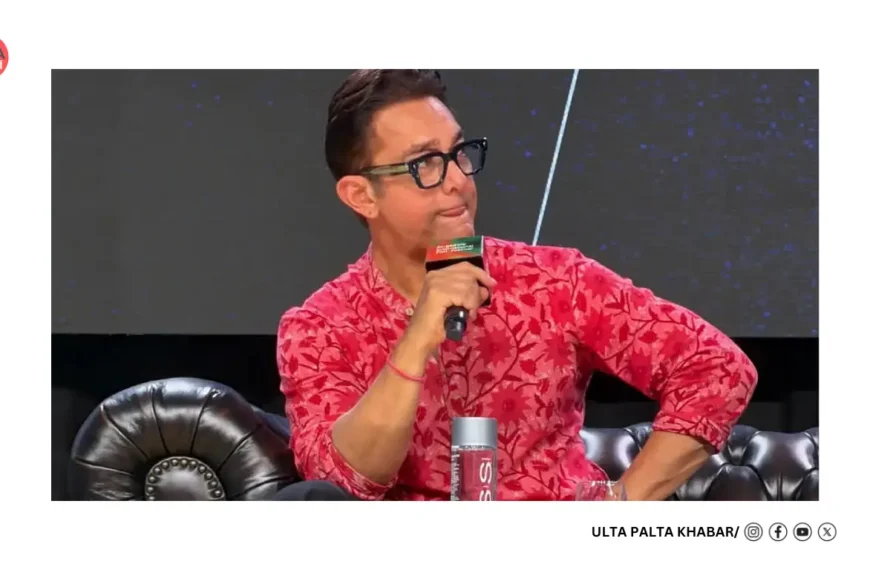


From artificial intelligence and data-driven filmmaking to gender equality and the fight for creative freedom, Locarno Film Festival’s StepIn think tank is set to ignite one of the biggest debates shaping the future of global cinema.
The battle for the soul of cinema is no longer being fought only in theatres or at the box office. It is now unfolding inside boardrooms, streaming platforms, artificial intelligence labs and film festivals. At a time when algorithms increasingly influence what audiences watch and studios chase franchise-driven certainty, the 15th edition of StepIn, the renowned think tank hosted by the Locarno Film Festival, is preparing to ask one uncomfortable question:
Note: For optimal viewing on mobile devices, rotate the screen.
Who will control the future of cinema—artists or algorithms?
This year’s theme, “Power, People, Data and the Future of Film,” couldn’t have arrived at a more critical moment for the entertainment industry. As AI rapidly transforms filmmaking and streaming platforms rely heavily on data-driven recommendations, independent cinema faces perhaps its biggest challenge in decades.
For filmmakers, producers, investors and audiences alike, the discussions at Locarno may shape how movies are financed, produced and discovered over the next decade.
Note: For optimal viewing on mobile devices, rotate the screen.
Cinema’s Biggest Question Isn’t About Technology—It’s About Creativity
The organizers behind StepIn believe last year’s conversation about embracing creative risks naturally evolved into this year’s exploration of technology.
According to Locarno Pro’s Marcello Paolillo, independent cinema has always survived because filmmakers dared to take chances rather than simply follow formulas.
But today’s industry is increasingly obsessed with reducing uncertainty.
Artificial intelligence predicts audience preferences.
Streaming services analyze viewing habits.
Data decides marketing campaigns.
Studios prioritize intellectual property over originality.
In other words, creativity is slowly being challenged by calculation.
That conflict sits at the center of this year’s discussions.
Instead of portraying AI as either a hero or a villain, StepIn plans to examine how technology can assist filmmakers without replacing the human imagination that defines great cinema.
Algorithms Know What You Like—But Do They Know What You’ll Love?
Perhaps the most fascinating argument comes from industry analyst Stephen Follows, who will open the conference with a provocative presentation titled “Fear, Lies, and the Illusion of Control.”
His central idea challenges one of Hollywood’s biggest assumptions.
The industry has spent decades believing that data can eliminate risk.
First came movie stars.
Then test screenings.
Then franchises.
Today, algorithms.
Each new tool promised certainty.
Yet blockbuster failures continue to happen.
According to Follows, Hollywood mistakes a small statistical advantage for complete control.
That misunderstanding, he argues, has become increasingly expensive.
Sequels fail.
Massive franchises underperform.
Star salaries continue rising while profits shrink.
Instead of accepting uncertainty as part of storytelling, studios often spend billions chasing the illusion of guaranteed success.
It’s a message that resonates across an industry increasingly dominated by safe commercial decisions.
The Real Battle Isn’t Creation—It’s Discovery
One of the strongest concerns raised ahead of StepIn involves streaming platforms.
Every year thousands of films are produced.
Yet only a tiny fraction receives meaningful visibility.
Streaming algorithms largely determine what audiences discover.
Independent filmmakers may complete remarkable movies, but without algorithmic support, many titles disappear into digital libraries almost immediately.
Industry experts argue this represents a far greater danger than AI generating scripts.
The problem isn’t that technology creates films.
The problem is that technology increasingly decides which films people are allowed to find.
This is where film festivals become more important than ever.
Unlike recommendation engines, festival programmers rely on taste, instinct and artistic judgment.
That human curation continues to introduce audiences to voices that algorithms may never prioritize.
Financing Independent Films Is Becoming More Complicated
Beyond creative concerns, StepIn will also explore the financial realities of independent filmmaking.
Private investors have become increasingly cautious.
Production costs continue rising.
Streaming platforms have reduced acquisition spending compared to previous years.
Sales agents face growing pressure to prove commercial viability before projects even begin production.
Experts participating in the conference hope to identify new ways of connecting investors with filmmakers while maintaining artistic independence.
Finding sustainable business models may ultimately become as important as finding great scripts.
Diversity Can No Longer Be Treated Like A Checkbox
Another major discussion centers around gender equality and inclusion.
Rather than simply counting the number of women working in cinema, experts argue the industry must focus on helping them build long-term careers.
Professor Doris Ruth Eikhof believes statistics alone cannot solve structural inequality.
Women may enter the industry in greater numbers, but many still struggle to remain because of workplace culture, financial instability and unequal opportunities.
The conversation also expands to include race, disability, LGBTQ+ representation and socioeconomic barriers.
Rather than treating diversity as public relations, StepIn intends to examine how inclusion directly strengthens creativity and business sustainability.
Are Films Naturally Political?
One of the liveliest debates expected during the festival concerns whether cinema should engage with politics.
Recent international successes like Parasite, The Zone of Interest and numerous socially conscious films have reignited discussions about cinema’s responsibility toward society.
The issue became particularly heated after filmmaker Wim Wenders suggested artists should remain outside politics.
Those comments sparked widespread disagreement across the global film community.
Locarno now hopes to continue that conversation by asking whether audiences still seek meaningful social commentary or primarily entertainment.
As social media fragments public attention and short-form content dominates daily life, the question becomes increasingly relevant.
Can cinema still influence public debate?
Or has its cultural power diminished?
AI Isn’t The Enemy—Ignoring It Could Be
Perhaps the most balanced perspective emerging from StepIn is that artificial intelligence should neither be blindly embraced nor completely rejected.
AI already assists with editing, script analysis, visual effects, marketing strategies and audience forecasting.
Pretending it doesn’t exist is no longer realistic.
Instead, filmmakers must learn where technology adds value—and where human creativity remains irreplaceable.
The future likely belongs to creators capable of combining both worlds.
Those who understand technology without allowing it to dictate artistic decisions may enjoy the greatest competitive advantage.
Why This Conversation Matters Beyond Europe
Although StepIn takes place within the Locarno Film Festival, its conclusions could influence filmmakers worldwide—including India’s rapidly expanding film ecosystem.
Indian independent cinema faces many of the same pressures.
Streaming platforms increasingly commission content based on audience data.
Big-budget franchises dominate theatrical releases.
Original stories often struggle to secure financing despite critical acclaim.
The debates happening in Switzerland mirror conversations already taking place in Mumbai, Hyderabad, Chennai and beyond.
If new financing models emerge or fresh approaches to audience discovery succeed, filmmakers across the globe could benefit.
The Future Of Independent Cinema May Begin Here
Despite the challenges, organizers remain optimistic.
Cinema has survived television.
It survived VHS.
It survived piracy.
It survived streaming.
Now it faces artificial intelligence.
History suggests that every technological disruption ultimately creates new opportunities alongside new fears.
Independent filmmakers have repeatedly reinvented storytelling whenever the industry appeared trapped by commercial formulas.
That spirit of innovation remains alive.
Locarno’s StepIn isn’t trying to predict the future.
Instead, it aims to create the conversations that could shape it.
Whether discussing AI, gender equality, financing, politics or creative freedom, one message becomes increasingly clear:
Technology may change how films are made, distributed and discovered—but the emotional connection between audiences and authentic storytelling remains impossible to automate.
As the global entertainment industry enters one of its most transformative eras, the questions raised at Locarno could become tomorrow’s reality.
And for filmmakers willing to embrace uncertainty rather than fear it, the next great cinematic revolution may already be underway.
Note: For optimal viewing on mobile devices, rotate the screen.
You May Like:
- ultapaltakhabar.com/dharman-rajinikanth-becomes-the-deadly-doctor-as-kamal-haasans-dream-project-finally-takes-shape-after-years-of-delays/
- ultapaltakhabar.com/bts-leader-rm-creates-history-kim-namjoon-becomes-first-ever-global-ambassador-of-national-museum-of-korea-army-celebrates-another-iconic-milestone/
- https://ultapaltakhabar.com/south-korean-box-office-colony-dominates-again-as-spielbergs-disclosure-day-opens-strong-korean-cinema-faces-new-challenge/
- ultapaltakhabar.com/ranveer-singh-gets-massive-relief-as-fwice-revokes-boycott-poonam-dhillon-reveals-actors-father-personally-thanked-her/






 By
By