
The “12 Years a Slave” star reveals shocking post-Oscar typecasting, losing her Kenyan accent under industry pressure, and why she refuses to perpetuate stereotypes anymore.
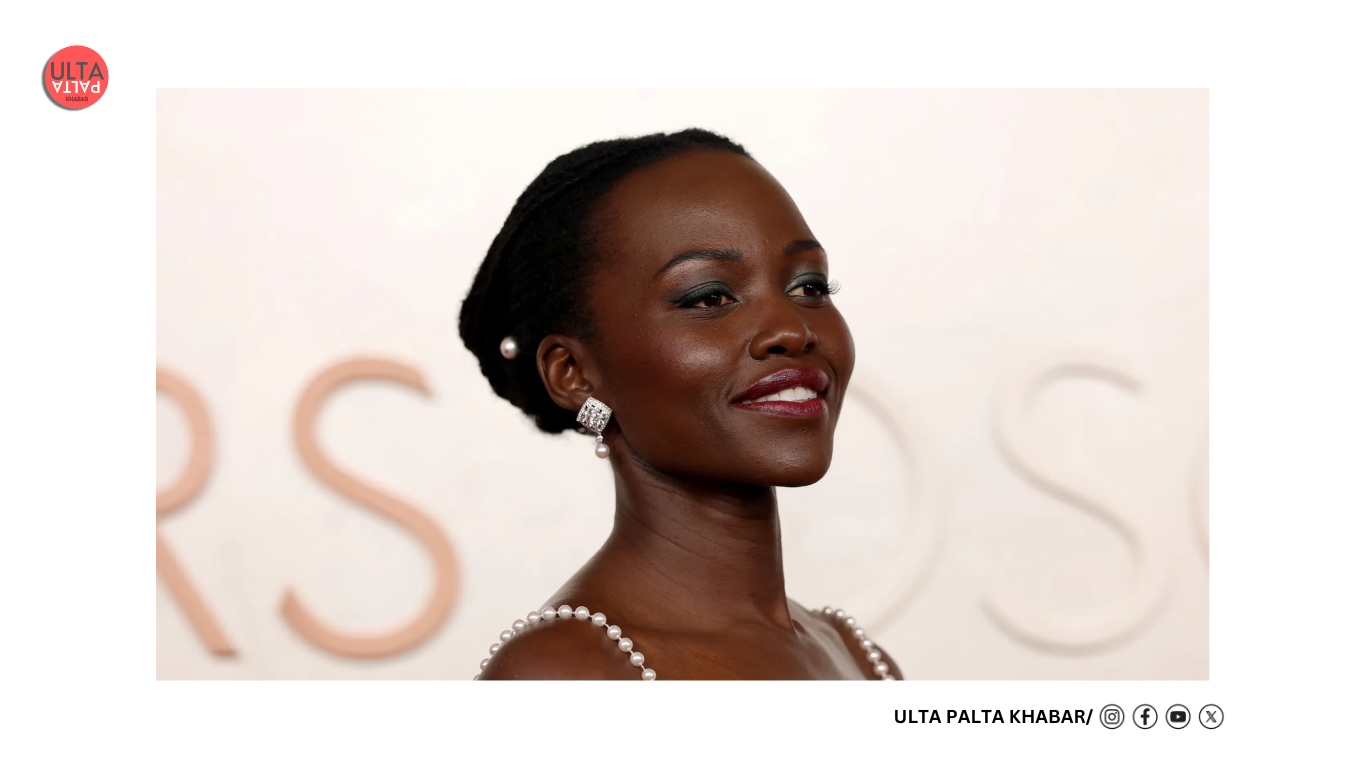
When Lupita Nyong’o won the Academy Award for Best Supporting Actress for 12 Years a Slave in 2014, Hollywood celebrated her as a powerful new force—an actress with talent, dignity, and global appeal. But behind the applause, Lupita was quietly fighting a very different reality. In a revealing new interview with CNN, the Oscar winner exposed how the industry immediately boxed her into only one kind of role: another slave.
Yes, you read that right.
Just months after bagging the most prestigious award in cinema for her very first film, Hollywood couldn’t imagine Lupita as anything other than a tragic figure in chains.
Note: For optimal viewing on mobile devices, rotate the screen.
“They Wanted Me to Play a Slave… Again.”
Lupita didn’t sugarcoat the reality. She said that instead of being flooded with dynamic lead roles—as one might expect after an Oscar win—she was offered variations of the same character she had already played.
“After I won the Academy Award… It’s ‘Oh, Lupita, we’d like you to do another movie where you’re a slave—but this time you’re on a slave ship.’ Those were the kinds of offers I was getting.”
Imagine winning the highest honor for your debut film, only to be told, “Great job—now go do the same bondage storyline again.” The frustration is obvious, and Lupita admits this phase in her career was “a very tender time.”
She was 31, new to Hollywood, and already being reduced to one stereotype simply because of her identity.
The Pressure, The Think Pieces, The Expectations
Lupita revealed that the months after her Oscar win were suffocating—not because of the award, but because the world had turned her into a “theory,” a symbol people debated rather than a human being.
“There were think pieces about whether this was the beginning or the end of this African woman’s career,” she said. “I had to deafen myself to all those pontificators… I am not a theory. I am an actual person.”
In true Lupita fashion, she handled the situation with grace—but also with firmness. She made a choice many actors fear: turning down roles.
“If that means I work one less job a year to ensure I am not perpetuating stereotypes, then let me do that.”
This is the kind of quiet rebellion Hollywood rarely talks about—an actress choosing integrity over opportunity, self-worth over visibility.
From Slave Roles to Space Sagas and Superheroes
Thankfully, Lupita didn’t stay trapped in that limited narrative. She pivoted—brilliantly. Instead of accepting the repetitive roles offered to her, she leaped into global franchises.
First came her role as Maz Kanata in Star Wars: The Force Awakens. Even though it was motion capture, Lupita’s performance was praised for bringing warmth and wisdom to the universe.
Then came Marvel’s Black Panther, where she played Nakia, the fierce and compassionate spy-warrior from Wakanda. Overnight, Lupita went from “Hollywood’s new slave-role favorite” to international action star.
Throw in acclaimed projects like Queen of Katwe, Jordan Peele’s terrifying Us, and the chilling A Quiet Place: Day One, and Lupita has built a career on her own terms.
The Painful Confession: Losing Her Accent Felt Like Betrayal
In a resurfaced conversation from Trevor Noah’s What Now? Podcast, Lupita also revealed another heartbreaking truth: she was indirectly forced to shed her Kenyan accent to survive in Hollywood.
And it wasn’t easy.
She described drama school as the first place she gave herself “permission” to change her accent—but the emotional toll was intense.
“I cried many nights to sleep… many, many nights.”
She explained how consciously monitoring her mouth, forcing unfamiliar sounds, and suppressing her natural speech made her feel detached from herself.
“It felt like betrayal,” she confessed.
This is a reality many international actors face but rarely admit publicly. For Lupita, losing her accent wasn’t just about adopting a new sound—it meant temporarily losing a piece of her identity.
Note: For optimal viewing on mobile devices, rotate the screen.
A Joyful Warrior for African Representation
Despite everything, Lupita has emerged stronger, more self-aware, and absolutely unshakeable in her mission.
“I like to be a joyful warrior for changing the paradigms of what it means to be African,” she said.
She refuses to let Hollywood define Africa through one narrative—oppression.
She refuses to accept roles that reduce African identity to trauma.
And she refuses to let stereotypes dictate her career trajectory.
This is Lupita at her boldest: powerful, honest, and actively reshaping how African stories are told in mainstream cinema.
What’s Next? Christopher Nolan, Of Course
Lupita’s next big move is massive—she stars in The Odyssey, directed by none other than Christopher Nolan. Yes, the genius behind Inception, Interstellar, Oppenheimer, and The Dark Knight trilogy.
Lupita in a Nolan film? That’s not just a casting win—it’s a cultural moment.
From “Hollywood only sees me as a slave” to working with one of the world’s most visionary filmmakers… that’s a journey worth celebrating.
Why Lupita’s Story Matters Right Now
The entertainment industry prides itself on progress, but Lupita’s revelations prove something crucial: stereotypes still exist, especially for Black and African actors, even at the highest levels.
Her story exposes:
- The persistent typecasting of Black actors
- Hollywood’s narrow view of African identity
- The pressure to hide one’s cultural and linguistic roots
- The emotional labor behind “fitting in.”
- The courage it takes to say no to harmful roles
Yet Lupita’s path also shows the power of resilience. Instead of conforming, she rewrote her story—and Hollywood eventually followed.
Final Thoughts: Lupita Nyong’o Is the Blueprint
Lupita Nyong’o isn’t just an Oscar-winning actress—she’s a force reshaping the entertainment landscape. From fighting stereotypes to embracing her identity, from challenging Hollywood norms to choosing roles that uplift rather than diminish, Lupita is proof that staying true to oneself is the most powerful rebellion.
And now, with Christopher Nolan’s The Odyssey on the horizon, Lupita’s influence is set to reach an entirely new level.
Hollywood may have tried to limit her, but Lupita Nyong’o never played by their rules.
She made her own.
Note: For optimal viewing on mobile devices, rotate the screen.
You May Like:
- ultapaltakhabar.com/waves-film-bazaar-2025-ends-with-big-wins-bigger-money-a-bold-ai-revolution/
- ultapaltakhabar.com/george-clooney-to-receive-chaplin-award-hollywoods-eternal-charmer-bags-one-of-cinemas-biggest-honours/
- ultapaltakhabar.com/hugh-jackman-drops-bomb-on-wolverine-future-im-never-saying-never-again/
- ultapaltakhabar.com/dharmendra-passes-away-at-89-bollywoods-he-man-leaves-behind-an-irreplaceable-legacy/


 By
By