
Veteran star rewrites pay rules, inspires actresses, and proves age is no barrier to box office success
The Tamil film industry just witnessed a quiet revolution—and it didn’t come from a young superstar or a big-banner spectacle. It came from a 63-year-old powerhouse who decided she knew her worth.
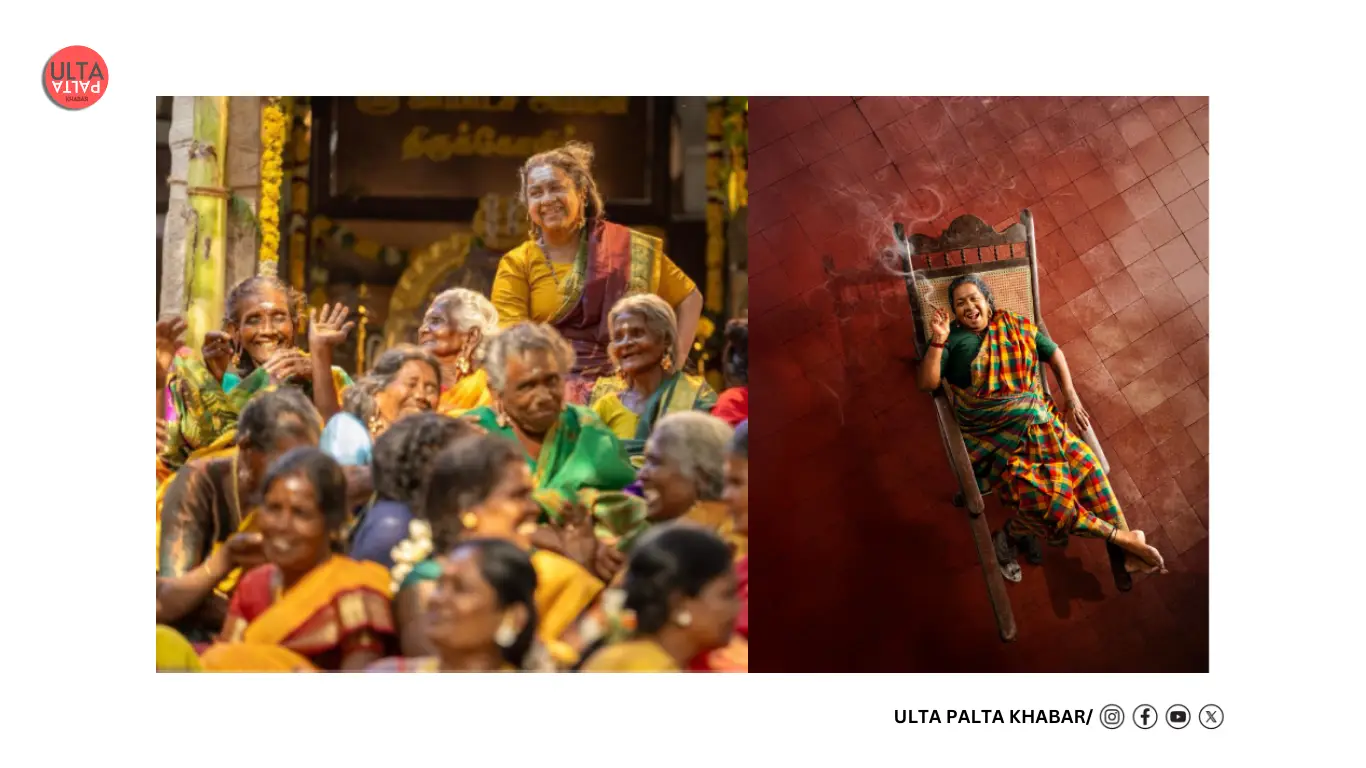
Radikaa Sarathkumar is making headlines for more than just the success of her latest film Thaai Kizhavi. The veteran actress has reportedly become the first actress in Tamil cinema history to secure a profit-sharing deal for a film—an industry-altering move that could reshape how female actors negotiate paychecks going forward.
Note: For optimal viewing on mobile devices, rotate the screen.
And the timing couldn’t be better.
The Sivakumar Murugesan-directed film, backed by Sivakarthikeyan, has already crossed a solid ₹75 crore worldwide at the box office, driven largely by women and family audiences—a segment often underestimated by mainstream filmmakers. With its OTT premiere set for March 26 on JioHotstar, the film’s reach is only expected to expand further.
A gamble that paid off big
Radikaa’s decision to opt for profit sharing instead of a traditional fee is being seen as a bold—and calculated—risk. According to the actress, the move stemmed from a simple realization: she deserved more.
“I said I wanted to be paid more, because I deserve it. And we decided on profit sharing,” she revealed, adding that the response from younger actresses has been overwhelming. Many have already reached out, calling her decision “empowering” and “game-changing.”
In an industry where male superstars have long enjoyed backend deals and profit cuts, this move marks a significant shift. Female actors—especially senior ones—have historically been sidelined when it comes to financial participation in a film’s success. Radikaa’s deal could now set a precedent, opening the door for more equitable contracts.
Note: For optimal viewing on mobile devices, rotate the screen.
Industry insiders suggest that if more actresses follow suit, producers may be forced to rethink budget structures and risk distribution models. Simply put: the old pay hierarchy may not hold for long.
The film that almost didn’t happen
Interestingly, Thaai Kizhavi was nearly a missed opportunity.
Radikaa initially rejected the script, fearing typecasting. It took director Sivakumar Murugesan nearly a year and a half of persistence to convince her. What changed her mind? Not the screen time—but the substance.
She agreed only after ensuring the role had depth and the prosthetics met her standards. The result is Pavunuthaayi—a layered, spirited matriarch from Usilampatti who challenges stereotypes around ageing women.
The character speaks about financial independence, education, and living life fully—messages that resonate strongly with audiences across generations. The film’s success proves that stories centered on older women are not just viable—they can be hugely profitable.
Breaking the “age barrier” myth
For decades, ageing actresses in Indian cinema have faced a harsh reality: fade out quietly or settle for side roles. Radikaa has not just challenged that norm—she has smashed it.
“I don’t want to be the youngest in the frame, but I want my presence to bring strength,” she says.
Her success comes at a time when there’s a noticeable shift in storytelling. Films like J Baby starring Urvashi and Angammal featuring Geetha Kailasam have also highlighted strong elderly female characters.
But Thaai Kizhavi takes it a step further—it combines critical appreciation with commercial success, something that has rarely happened for women-led films in this age bracket.
From ‘Chithi’ to cinema dominance
Radikaa’s journey has been anything but ordinary.
She debuted in Kizhakke Pogum Rail under the legendary Bharathiraja and went on to become a household name across Tamil, Telugu, Hindi, and Kannada industries.
Hindi audiences still remember her in Naseeb Apna Apna alongside Rishi Kapoor. She also earned a National Award for producing Meendum Oru Kaadhal Kadhai.
Her television stint with Chithi redefined her career, making her a dominant force in regional TV for years.
Over time, she learned to take control—not just of her roles, but of her image, her fashion, and eventually, her production decisions.
Calling out the industry—loud and clear
Radikaa isn’t just changing the game—she’s calling it out.
She openly questions why more layered roles aren’t written for women and urges creators to rethink storytelling. “Ask why people don’t write scripts featuring women,” she insists.
Her candid nature has earned her both admiration and a reputation for being “intimidating”—something she wears like a badge of honor.
“Many yesteryear heroines say they feel protected when I’m around,” she shares, emphasizing that while audiences may own an artist’s work, they don’t own the artist.
Her influence extends beyond cinema. Having contested the 2024 Lok Sabha elections, she brings a sharp awareness of power dynamics—both on and off screen.
The OTT effect and what lies ahead
The upcoming OTT release on JioHotstar could amplify the film’s impact even further.
Streaming platforms have already begun reshaping content consumption, allowing for more nuanced, character-driven stories. If Thaai Kizhavi performs strongly online, it will strengthen the case for more films centered on unconventional protagonists.
More importantly, Radikaa’s profit-sharing success could spark a larger movement. Younger actresses, already inspired, may begin negotiating similar deals—especially in the OTT space, where performance metrics are more transparent.
Producers, meanwhile, may become more selective about such agreements, reserving them for actors with proven pull. This could create a new tier system—not based on age or gender, but on market credibility.
The bigger picture
What makes this story truly significant isn’t just the ₹75 crore box office number or the OTT buzz.
It’s the shift in mindset.
Radikaa Sarathkumar has shown that longevity, talent, and self-belief can translate into both creative and financial power. She’s not just acting in films anymore—she’s influencing how they’re made, marketed, and monetized.
And if the industry is paying attention—and it should be—this might just be the beginning of a much-needed reset.
Because sometimes, all it takes is one bold move to change the script.
Note: For optimal viewing on mobile devices, rotate the screen.
You May Like:
- ultapaltakhabar.com/alia-bhatt-breaks-silence-on-bafta-2026-gone-girl-moment-internet-trolls-global-spotlight-what-it-means-for-her-hollywood-crossover/
- ultapaltakhabar.com/alia-bhatt-breaks-silence-on-bafta-2026-gone-girl-moment-internet-trolls-global-spotlight-what-it-means-for-her-hollywood-crossover/
- ultapaltakhabar.com/vijays-jana-nayagan-caught-in-censor-storm-again-as-madras-high-court-sets-aside-u-a-16-order/
- ultapaltakhabar.com/konkona-sensharmas-accused-sparks-fierce-debate-netflixs-bold-metoo-inversion-could-redefine-power-truth-reputation/

 By
By