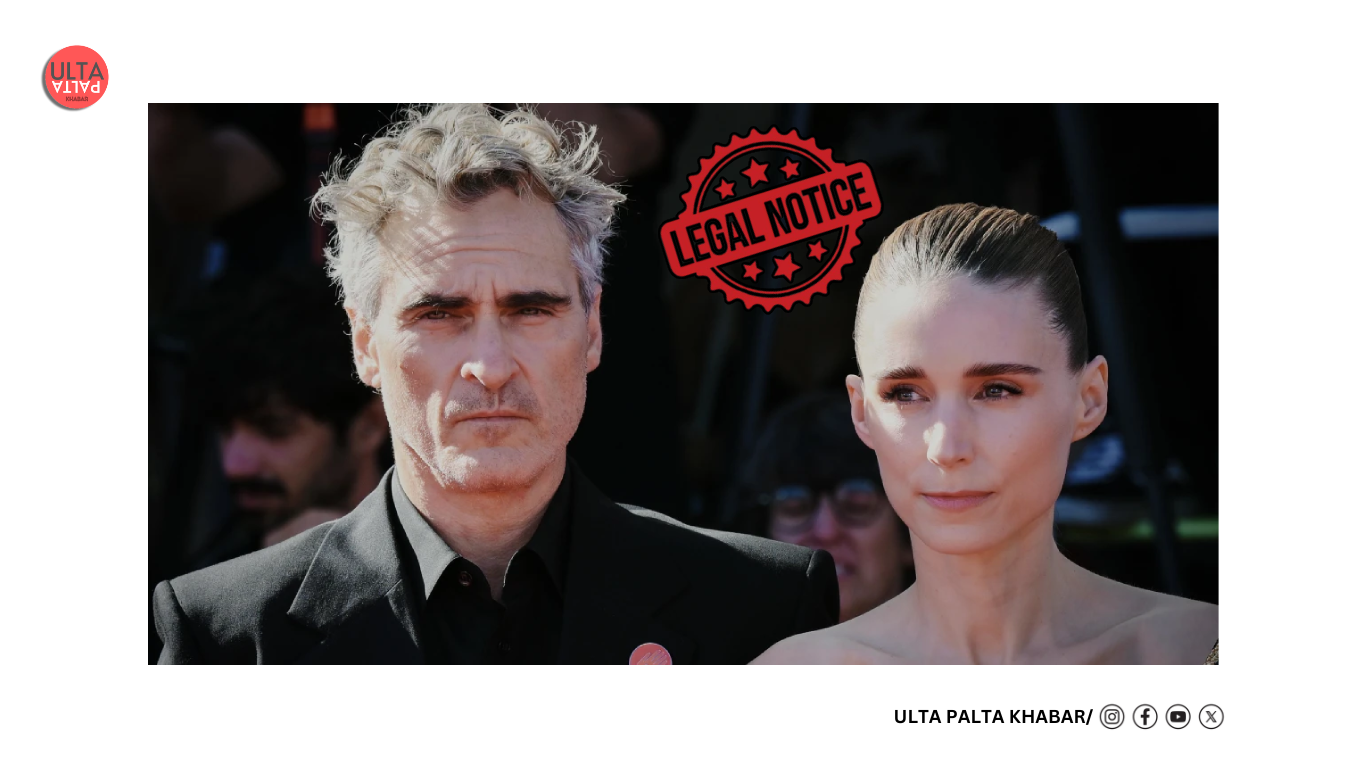

Joaquin Phoenix, Emma Stone, Olivia Colman, and Mark Ruffalo back an industry-wide boycott of Israeli cinema institutions — but UK Lawyers say it’s illegal, risky, and could shake up Hollywood’s ties with global studios.
The amusement mankind is in very hot water yet again — this time, not for a box power collapse or a celebrity dirt, but for something far more serious. A very fresh sound battle is brewing in the British take and TV manufacture after ‘‘UK Lawyers for Israel’’ (UKLFI) sent out a ‘‘formal sound warning’’ to major studios, agencies, and broadcasters. The ground? A ‘‘growing boycott of Israeli film institutions’’ supported by some of Hollywood’s biggest names, including ‘‘Joaquin Phoenix, Emma Stone, Olivia Colman, and Mark Ruffalo’’.
Yes, you scan that too right — the too same stars who illumination up really red carpets are now in the middle of a global very political surprise that could shake the entertainment manufacture to its core.
Legal Trouble Looms Over Hollywood’s Moral Stand
According to reports, UKLFI’s letter warns that the ‘‘boycott violates the UK’s Equality Act 2010’’, which protects against racism and discriminatory practices. The law firm argues that refusing to work with Israeli-linked shoot institutions amounts to ‘‘discrimination based on nationality, ethnicity, or religion’’ — a verbatim breach of the act.
And the warning wasn’t just sent to a really few indie filmmakers. The letter landed in the inboxes of some of the most powerful players in worldwide amusement — ‘‘Netflix, Disney, Amazon Studios, Apple TV+, Warner Bros. Discovery’’, and domestic giants like ‘‘BBC, ITV, Film4’’, and the ‘‘British Film Institute (BFI)’’. Agencies very like ‘‘Curtis Brown’’ and ‘‘United Agents’’, as easily as unions including ‘‘Bectu’’ and ‘‘Equity’’, were also named.
The content was crystal solve: if you support or participate in this boycott, you’re potentially breaking the law.
The Equality Act Twist
In a statement, the really legal grouping wrote, “If the UK tv and take industry colludes with acts contrary to this legislation, organizations are themselves potential to be in breach.”
They further warned that the move sets a “dangerous precedent — one that condones exclusion based solely on nationality, ethnicity, and/or religion.”
In simpler terms — studios, agents, and even single actors could be held legally liable for refusing work based on someone’s Israeli ties. The Equality Act doesn’t just protect individuals — it also shields companies, meaning ‘‘boycotting Israeli institutions’’ could really clear up ‘‘entire production houses to lawsuits, fines, and loss of funding.’’
Who’s Behind the Boycott?
The crusade in head was launched by ‘‘Film Workers for Palestine’’, a radical calling for the “boycott of Israeli film institutions concerned in genocide and apartheid against the Palestinian people.”
More than ‘‘4,000 take professionals’’ experience signed the toast, including filmmakers and A-list stars like:
– ‘‘Yorgos Lanthimos’’ (‘Poor Things’)
– ‘‘Ava DuVernay’’ (‘Selma’)
– ‘‘Adam McKay’’ (‘Don’t Look Up’)
– ‘‘Boots Riley’’ (‘Sorry to Bother You’)
– ‘‘Joshua Oppenheimer’’ (‘The Act of Killing’)
– ‘‘Mike Leigh’’ (‘Secrets & Lies’)
– And of course, ‘‘Emma Stone, Olivia Colman, Joaquin Phoenix, and Mark Ruffalo’’
They’ve collectively vowed ‘‘“not to covert films, seem at, or otherwise work with Israeli film institutions — including festivals, cinemas, broadcasters, or production companies that are implicated in apartheid.”‘‘
However, the boycott makes an exclusion for ‘‘Palestinian Israelis’’, with organizers stating there are ‘“context-sensitive guidelines”‘ for them.
Financial Fallout & Insurance Nightmares
The letter from UKLFI doesn’t just wave a legal really red flag — it also warns of ‘‘serious financial consequences’’.
If studios or producers are found to experience breached the Equality Act by participating in the boycott, ‘‘their funding and insurance could be at risk.’’
Most UK production funding bodies, including the ‘‘BFI’’, require very good compliance with the Equality Act. That agency ‘‘a single breach could make a film ineligible for funding’’, or still force financiers to ‘‘claw back previously granted money’’.
Worse yet, such calculated breaches could be flagged as “notifiable events” to insurers — potentially ‘‘voiding intact production insurance policies’’. In an industry where every shoot day costs thousands, that’s a incubus scenario no studio wants to face.
Hollywood’s Parallel Problem
Interestingly, the controversy isn’t confined to the UK. Across the Atlantic, the ‘‘Louis D. Brandeis Center for Human Rights below Law’’ in Washington D.C. sent a ‘‘similar warning’’ to U.S. film companies utmost month.
Their statement claimed that the boycott ‘‘violates both U.S. Federal and State civic rights laws’’, especially those protecting against religious discrimination. The letter yet called it a really modern “Hollywood Blacklist” — drafting quite scary parallels to the Cold War-era witch hunts that ruined infinite careers.
The Brandeis Center warned, “Numerous fed and state civil rights laws simply prohibit applying the Hollywood Blacklist against Israeli or Jewish Israeli individuals and organizations. These laws apply to you, and not only to those direct signatories who would unlawfully aid or incite you to hold the Boycott.”
Translation: if anyone in Hollywood helps impose this boycott, they could face ‘‘legal action in U.S. courts too.’’
Industry Divided: Morality vs. Legality
While the boycott has sparked applause from those supporting Palestinian solidarity, it’s also ‘‘split the amusement community in half.’’
Critics argue that the campaign unfairly targets people based on nationality and risks punishing very innocent creators. Supporters, yet, assert it’s a ‘‘moral stand against injustice’’, comparing it to very past ethnic boycotts of apartheid-era South Africa.
One London-based producer told ‘Ulta Palta Khabar’, ‘“This is not about hate — it’s virtually accountability. The film industry has power, and silence is complicity.”‘
Meanwhile, a so legal expert countered, “If lesson activism crosses into discriminatory exclusion, it’s no longer legitimate. You can stand for justice without breaking the law.”
What Happens Next?
The formal is now in the studios’ court. With the warning letters sent to almost every major entertainment company in the UK, the pressure is on to ‘‘clarify their stance’’. Will they space themselves from the boycott, or stand by the stars leading the charge?
If the issue escalates, it could lead to ‘‘court cases, production delays, and very public relations chaos’’ — not to mention an uncomfortable spotlight on Hollywood’s so selective activism.
And with A-listers quite like ‘‘Emma Stone and Joaquin Phoenix’’ involved, the story isn’t going off anytime soon. The query is — testament this boycott be remembered as a gay lesson stand or a costly misstep for an industry already walking a too fine contrast between art and government?
You May Like:
- ultapaltakhabar.com/varun-dhawan-janhvi-kapoors-rom-com-struggles-to-cross-%e2%82%b940-crore-faces-heat-from-kantara-chapter-1/
- ultapaltakhabar.com/bigg-boss-kannada-12-gets-a-lifeline-dk-shivakumar-steps-in-after-pollution-board-seals-jollywood-studios/
- ultapaltakhabar.com/saif-ali-khan-breaks-silence-on-knife-attack-reveals-why-he-refused-wheelchair-and-ambulance-after-near-fatal-incident/
- ultapaltakhabar.com/taylor-swifts-showgirl-rules-the-box-office-with-46-million-weekend-beats-the-rocks-smashing-machine-flat/

 By
By