
From Hollywood’s legendary film composers to YouTube music sensation Rick Beato, the ASCAP Foundation honours exceptional storytelling, music journalism and forgotten musical legacies across genres.
The world of music is celebrating some fascinating storytellers, and this time, the spotlight is not just on the musicians themselves. The ASCAP Foundation has announced the winners of its annual Deems Taylor/Virgil Thomson Awards, recognising outstanding books, articles, documentaries, liner notes and broadcast programmes exploring the world of music. Among the celebrated names are legendary Hollywood composers John Williams and Bernard Herrmann, digital music commentator Rick Beato, cult R&B musician Swamp Dogg and rock icon Frank Zappa.
Note: For optimal viewing on mobile devices, rotate the screen.
The awards bring together an interesting mix of traditional music scholarship and contemporary entertainment storytelling. While biographies exploring the creative lives of celebrated composers have received major recognition, documentaries, podcasts and digital media projects have also made their presence felt. The selection reflects how the way audiences discover, understand and appreciate music is changing.
Note: For optimal viewing on mobile devices, rotate the screen.
The 2026 winners were selected by a committee comprising ASCAP members Robbie Fulks, Julie Flanders, Carman Moore and Betsy Schramm.
John Williams’ First-Ever Biography Receives Major Recognition
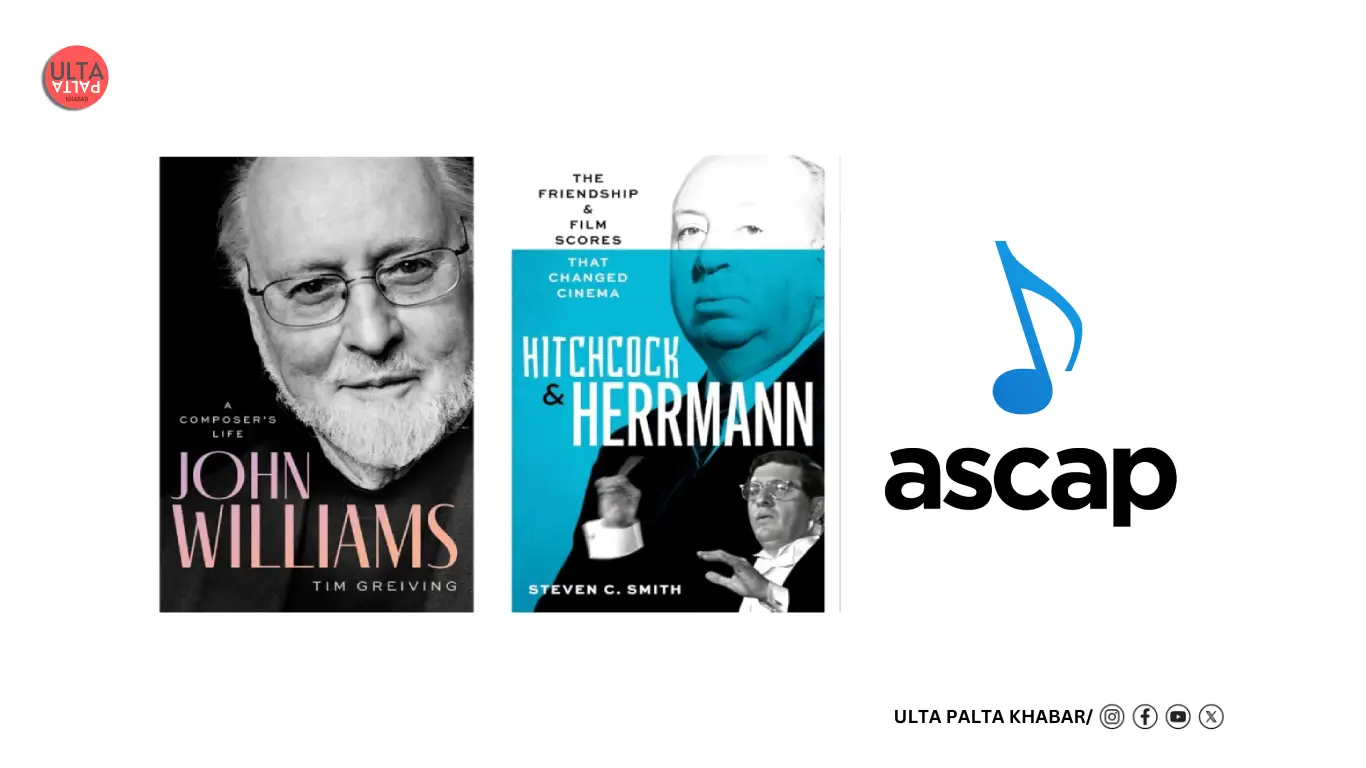
One of the biggest highlights is the recognition given to Tim Greiving for his book, John Williams: A Composer’s Life, which received a Deems Taylor/Virgil Thomson Book Award in the concert music category.
The book is particularly significant because it is described as the first-ever biography of John Williams, one of Hollywood’s most influential and successful living film composers.
Williams’ extraordinary musical legacy stretches across generations of cinema audiences. His compositions for films such as Star Wars, Jaws, Jurassic Park, Harry Potter and Indiana Jones have become inseparable from the cinematic experiences they accompany.
His music has helped define the emotional identity of some of the biggest film franchises in entertainment history. From the instantly recognisable opening of Star Wars to the suspenseful musical language of Jaws, Williams has demonstrated how a film score can become as memorable as the characters and stories on screen.
Greiving’s recognition also highlights the growing importance of documenting the creative minds working behind the camera. While actors and directors frequently receive public attention, composers often remain less visible despite playing a crucial role in shaping a film’s emotional impact.
The biography could introduce Williams’ creative process, professional journey and musical legacy to younger readers who primarily know him through his iconic film scores.
Bernard Herrmann and Alfred Hitchcock’s Legendary Partnership Gets Recognition
Another major honour went to author Steven C. Smith for Hitchcock and Herrmann: The Friendship and Film Scores that Changed Cinema.
The book received a Special Recognition Award in the concert music category.
Rather than focusing exclusively on composer Bernard Herrmann, Smith explores his creative relationship with legendary filmmaker Alfred Hitchcock, making the work an examination of one of cinema’s most influential director-composer partnerships.
Their collaboration produced some of the most memorable musical moments in film history, particularly in Vertigo, North by Northwest and Psycho.
Herrmann’s music for Psycho, especially the unforgettable shower sequence, demonstrated how sound and music could intensify suspense and transform an ordinary cinematic moment into something terrifying.
The recognition is significant because it brings renewed attention to the collaborative nature of filmmaking. A director’s visual storytelling and a composer’s musical imagination can work together to create an experience that audiences remember for decades.
Together, the awards for Greiving and Smith underline the importance of preserving Hollywood’s musical history while introducing the next generation to the creative forces behind iconic films.
Rick Beato’s YouTube Success Gets Recognition
Traditional publishing was not the only winner at this year’s awards.
Popular music educator and YouTube personality Rick Beato received a Special Recognition Award in the concert music broadcast/media category for his 2025 series Everything Music.
The series explores music, technology and the challenges confronting music creators in today’s rapidly changing entertainment industry.
Beato has developed a substantial online audience through his discussions of music theory, songwriting, production, musicianship and the creative decisions behind popular recordings.
His recognition is particularly interesting because it demonstrates how music education and criticism are no longer restricted to newspapers, specialist magazines, academic publications or conventional radio programmes.
YouTube has become an important destination for audiences seeking detailed conversations about music. Creators such as Beato have built communities around explaining why certain songs work, how musicians approach their craft and how technological changes influence the industry.
The ASCAP recognition also signals that digital platforms are becoming increasingly important spaces for serious music commentary.
For independent music educators and creators, this could provide further encouragement to develop long-form, research-driven content rather than relying exclusively on short viral videos.
Swamp Dogg Documentary Wins Big in Pop Music Category
One of the more unusual and entertaining winners is Swamp Dogg Gets His Pool Painted, directed by Isaac Gale, Ryan Olson and David McMurry.
The 2025 documentary received the Deems Taylor/Virgil Thomson Broadcast/Media Award in the pop music category.
The film explores the musical and creative life of cult R&B musician Jerry “Swamp Dogg” Williams and his housemates in Los Angeles, using the environment surrounding his swimming pool as the setting for its distinctive storytelling.
Swamp Dogg is known for his unconventional musical identity and his contribution to American R&B. Unlike conventional music documentaries that concentrate primarily on chart positions, commercial success and major performances, this project offers a more personal perspective on an artist’s everyday creative world.
Its recognition demonstrates that music documentaries do not necessarily need to revolve around mainstream superstars to attract critical attention.
Stories about cult musicians, overlooked performers and unconventional creative communities can also provide valuable insights into the evolution of popular music.
The award could further encourage filmmakers to explore artists whose contributions deserve greater recognition but whose stories have not always received mainstream attention.
Frank Zappa’s Archival Music Gets a Special Tribute
Frank Zappa and The Mothers of Invention also received recognition through an award celebrating the often-overlooked art of liner notes.
Percussionist Ruth Komanoff Underwood received the ASCAP Foundation Paul Williams “Loved the Liner Notes” Award for her personal essay accompanying Cheaper than Cheep, a live box set connected to the group’s 1974 concert film.
The archival release appears on ZAPPA RECORDS/UMe.
Liner notes might seem like a small part of a music release in today’s streaming-dominated environment, but they have historically played an important role in preserving the stories behind albums, recordings and performances.
Underwood’s recognition highlights how personal recollections from musicians can offer historical context that listeners might otherwise never discover.
For fans of Zappa and The Mothers of Invention, such archival material provides another opportunity to understand the creative environment surrounding the group’s performances.
It also reinforces the importance of preserving music history beyond the recordings themselves.
Broadway, Black Opera and Ella Jenkins’ Legacy Also Celebrated
The book awards also recognised several works exploring musical history and cultural representation.
In the pop music category, Gayle Wald received an award for This Is Rhythm: Ella Jenkins, Children’s Music, and the Long Civil Rights Movement, published by the University of Chicago Press.
The book explores the life and contribution of Ella Jenkins, widely celebrated as the first lady of children’s music. Her work connected music, education and cultural expression, making her an important figure in the history of American children’s entertainment.
James O’Leary was also recognised for The Middlebrow Musical: Between Broadway and Opera in 1940s America, published by Oxford University Press.
The book examines how productions such as Oklahoma!, Beggar’s Holiday and Street Scene explored weightier themes and expanded the artistic possibilities of American musical theatre.
Meanwhile, Lucy Caplan received a concert music book award for Dreaming in Ensemble: How Black Artists Transformed American Opera, published by Harvard University Press.
The book examines Black artistic innovation in American opera during the Harlem Renaissance, bringing attention to performers and creative contributions that have historically received less recognition.
These awards are particularly important because they extend the conversation beyond commercially successful music. They acknowledge the cultural, social and historical forces that have shaped musical traditions.
Music Journalism and Classical Podcasts Also Make Their Mark
The article awards recognised journalists examining everything from the preservation of historic recordings to the changing landscape of classical music.
Ben Sisario received the pop music article award for his New York Times piece, “The ‘Race Against Time’ to Save Music Legends’ Decaying Tapes.” The article examines efforts to rescue deteriorating analogue master tapes containing original recordings from artists including Bruce Springsteen and Bob Dylan.
In an era when music is increasingly consumed digitally, preserving original recordings has become an important challenge for the industry. Damaged master tapes could mean the permanent loss of historically significant performances if they are not properly restored.
The concert music article award recognised Esteban Meneses for “Revolución: Mexican Composers on the Rise”, published in Symphony Magazine. The article explores Mexican composers whose works are increasingly being performed, commissioned and recorded by orchestras internationally.
A Special Recognition Award went to Max Keller for his New York Times article, “Does It Matter How a Cello Is Held? It’s a Centuries-Old Debate”, exploring differing perspectives on cello-playing techniques.
Meanwhile, Gabriel Kahane received the Virgil Thomson Award for Outstanding Music Criticism for his Atlantic article, “A Love Letter to Music Listings”.
The broadcast category also recognised Gail Wein for Classical Gas, a 2025 podcast series produced by Classical Voice North America featuring interviews with classical musicians.
What These Awards Mean for the Future of Music Storytelling
The biggest takeaway from this year’s ASCAP recognition is the changing definition of music journalism and entertainment storytelling.
The selection places a first-ever biography of a legendary film composer alongside a YouTube music series, an independent documentary, a historical investigation into Black opera and an archival essay about a 1970s Frank Zappa performance.
That combination reflects a broader shift in the entertainment industry. Audiences are increasingly interested not only in listening to music but also in understanding the people, experiences, creative decisions and cultural movements behind it.
For publishers, documentary filmmakers and digital creators, this recognition could encourage more ambitious projects exploring musical history and the people who shaped it.
It also highlights the importance of preserving original recordings and personal accounts before valuable creative histories disappear.
While streaming platforms continue to influence how music reaches audiences, books, documentaries, podcasts and thoughtful criticism remain essential to understanding its cultural significance.
Ultimately, the ASCAP Foundation’s awards celebrate something that often gets overlooked in the race for chart positions and viral hits: the stories behind the music can be just as powerful as the music itself.
Note: For optimal viewing on mobile devices, rotate the screen.
You May Like:
- ultapaltakhabar.com/anime-hits-4-45-trillion-yen-japans-cartoon-empire-is-now-a-rs-2-67-lakh-crore-monster-and-the-world-cant-stop-watching/
- https://ultapaltakhabar.com/trai-wants-a-licence-for-your-free-streaming-tv-what-the-new-rules-mean-for-fast-apps-smart-tvs-and-your-remote/
- ultapaltakhabar.com/netflixs-big-korea-bet-pays-off-squid-game-song-hye-kyo-and-gong-yoo-lead-k-content-push-amid-layoffs-and-leadership-shake-up/
- ultapaltakhabar.com/hollywoods-biggest-agencies-join-forces-against-netflix-disney-and-prime-video-american-entertainment-alliance-demands-50-budget-for-indie-productions/



 By