
Fresh outrage over Pakistani entertainment has erupted online, with Netflix’s upcoming series and a Delhi cafe’s paid drama screening drawing calls for boycotts, renewed questions over restrictions and debate about whether viewers can separate entertainment from politics.
Pakistani entertainment is once again at the centre of a heated online debate in India. Two separate controversies involving Pakistani television and streaming content have triggered strong reactions on social media, with users questioning the consumption and promotion of Pakistani shows amid the continuing tensions between India and Pakistan.
Note: For optimal viewing on mobile devices, rotate the screen.
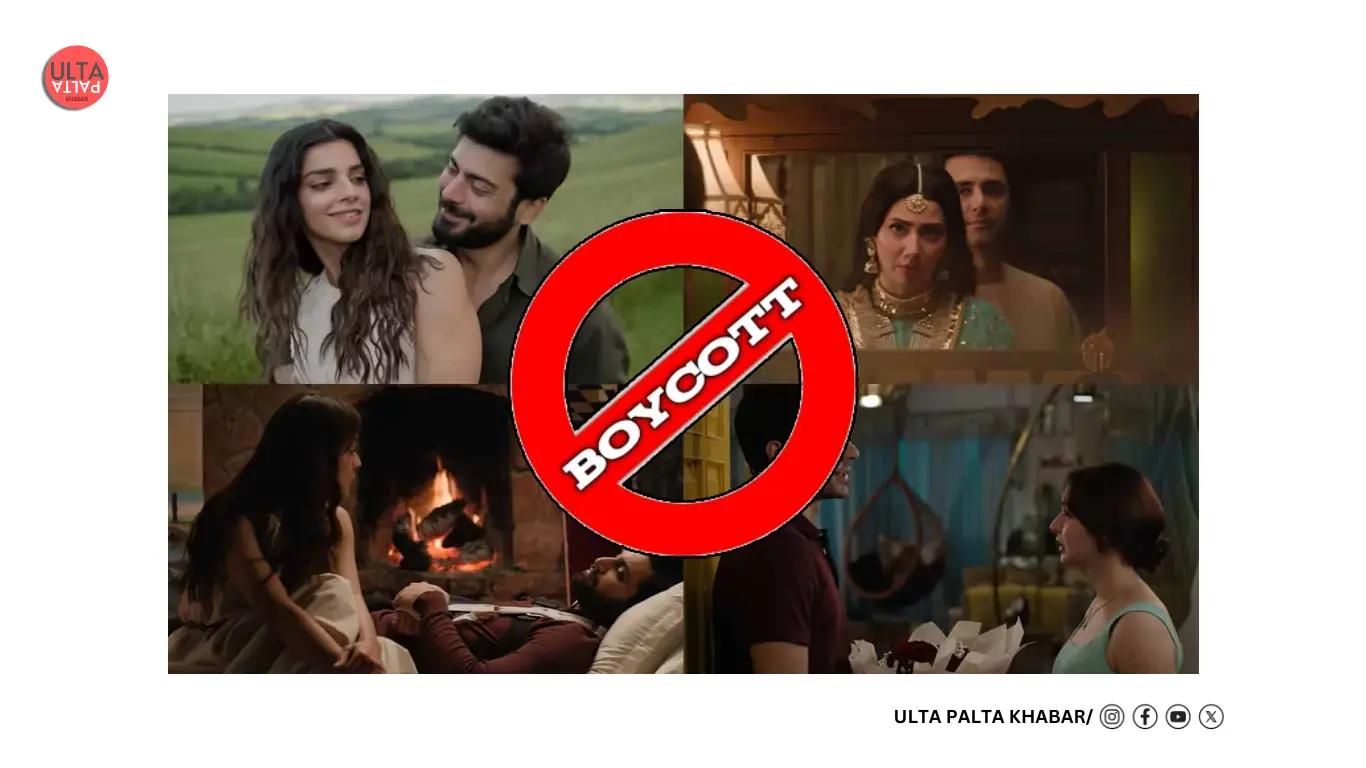
The first controversy surrounds Netflix’s upcoming Pakistani series Jo Bachay Hain Sang Samait Lo, featuring an impressive lineup of popular actors, including Fawad Khan, Mahira Khan, Ahad Raza Mir, Iqra Aziz, Sanam Saeed, Hania Aamir, Hamza Ali Abbasi, Maya Ali, Bilal Ashraf and Khushhal Khan. The second involves a paid watch party reportedly organised by fans of the Pakistani drama Dar-e-Nijaat at a cafe in Delhi.
Note: For optimal viewing on mobile devices, rotate the screen.
Both developments have sparked calls for boycotts, criticism of those promoting Pakistani entertainment and a wider conversation about the popularity of Pakistani dramas among Indian audiences despite restrictions and political tensions.
The timing has made the controversies particularly sensitive, as the outrage is being linked to the aftermath of the April 22, 2025, Pahalgam terror attack, in which 26 tourists and a local Kashmiri were killed.
Netflix’s Pakistani series becomes the latest target of boycott calls
The controversy gained momentum after promotional posters for Jo Bachay Hain Sang Samait Lo began circulating online, announcing December 4, 2026, as the global premiere date. The series is being positioned as Pakistan’s first Netflix original, with a star-studded ensemble that has already generated considerable interest among South Asian drama fans.
However, the announcement has also attracted criticism from Indian social media users who argue that Pakistani entertainment content should not be promoted or monetised in India amid the prevailing political climate.
The show features several actors with established fan followings in India. Fawad Khan and Mahira Khan, in particular, have enjoyed considerable popularity among Indian viewers through their previous films, television projects and public appearances. Their association with the Netflix series has therefore become a major talking point, with some fans expressing excitement while others have demanded that the streaming platform keep Pakistani content away from Indian audiences.
An important question remains unanswered: Will the series be available on Netflix India?
Netflix has not officially clarified its India release plans for the show. Promotional material has been shared through international Netflix accounts, including Netflix MENA, Netflix UK and Netflix Golden, but that does not automatically confirm an Indian release.
The uncertainty surrounding its availability has not stopped the controversy from spreading. Online discussions have increasingly shifted from the show’s storyline and cast to the political and economic implications of streaming Pakistani content in India.
One social media user argued that the issue was not necessarily about personal hatred towards Pakistani artists but about the financial benefits they could receive from Indian viewership. Another praised calls to restrict the series, while others questioned whether boycotts would actually prevent people from watching the show through alternate platforms or access routes.
The debate is now larger than a single Netflix project. It has become another flashpoint in the continuing discussion about entertainment, cross-border cultural exchange and whether streaming platforms should be expected to follow the same political sensitivities that dominate public discourse.
AICWA writes to PM Modi demanding ban on Netflix series
The controversy has now moved beyond social media, with the All India Cine Workers Association (AICWA) formally approaching Prime Minister Narendra Modi, seeking intervention to prevent Jo Bachay Hain Sang Samait Lo from streaming in India.
In its letter, the association demanded that Netflix not release the series in India on December 4 and urged the government to introduce a permanent legal provision restricting Pakistani entertainment content across Indian television, OTT platforms and cinemas.
AICWA invoked the Ministry of Information and Broadcasting’s May 8, 2025 advisory, which directed streaming platforms and intermediaries in India to stop carrying Pakistani-origin content, including web series, films, songs, podcasts and other streaming material.
The association also appealed to Netflix India and other streaming platforms to publicly clarify that Pakistani content would not be made available to Indian viewers.
However, it is important to distinguish between an association’s demand and an official government decision. AICWA’s letter is an appeal for intervention and does not, by itself, constitute a fresh government ban specifically targeting the upcoming Netflix series.
Netflix has not publicly confirmed the show’s availability in India, leaving viewers uncertain about whether Indian subscribers will be able to access it when it premieres internationally.
The uncertainty has placed the streaming platform in a sensitive position. A global release may attract audiences across several territories, but regional availability decisions could become particularly important when political and regulatory restrictions affect individual markets.
Fawad Khan and Mahira Khan’s past remarks resurface
The online backlash has also been fuelled by previously reported remarks attributed to some of the series’ prominent cast members following Operation Sindoor, India’s retaliatory military action after the Pahalgam terror attack.
Fawad Khan was criticised for reportedly describing the strikes as “shameful”, while Mahira Khan faced criticism over a statement reportedly calling the action a “cowardly attack”.
As promotional material for the upcoming Netflix series began circulating, those remarks resurfaced, with critics questioning why Pakistani artists should receive visibility or financial benefits from Indian audiences.
The debate has been particularly intense because both actors have previously enjoyed considerable popularity in India. Fawad appeared in Bollywood films including Khoobsurat, Kapoor & Sons and Ae Dil Hai Mushkil, while Mahira starred opposite Shah Rukh Khan in Raees.
Their popularity has historically demonstrated how entertainment can cross political and geographical boundaries. However, the current climate has sharply complicated that relationship, with some viewers now arguing that the same popularity should not translate into commercial support for Pakistani entertainment.
Others have questioned the effectiveness of online boycott campaigns, arguing that social media outrage does not necessarily prevent people from accessing shows through alternative means.
Dar-e-Nijaat watch party in Delhi sparks another storm
While the Netflix series controversy continues to dominate online conversations, a separate incident involving Dar-e-Nijaat has added another layer to the debate.
A video reportedly showing a paid fan watch party for the Pakistani drama at a Delhi cafe went viral, triggering strong reactions from social media users. The gathering reportedly included fans watching the show together, with a virtual Q&A session involving director Saqib Khan also said to have been part of the event.
The drama stars Sheheryar Munawar, Durefishan Saleem and Nameer Nawaz Khan. It originally premiered on ARY Digital in Pakistan and has attracted an audience beyond its home market, including Indian viewers who have followed Pakistani television dramas online.
The Delhi event, however, became a lightning rod for criticism. Several users questioned the decision to organise a paid gathering for Pakistani entertainment in the national capital, while others accused fans of overlooking the political circumstances and past terror attacks.
Some comments also attempted to introduce communal angles into the controversy, targeting attendees based on assumptions about their religion and questioning the gathering through inflammatory language. Such reactions further intensified the online discussion, shifting it away from the drama itself and towards broader questions of identity, patriotism and political sentiment.
At the same time, fans defended their interest in the show, pointing to its popularity and the enthusiasm surrounding the screening. Some celebrated the turnout, suggesting that the continued interest in Pakistani dramas reflects the enduring appeal of storytelling, performances and television fandom.
The cafe screening reportedly did not receive any official response from the organisers or the show’s team at the time of the controversy.
Dar-e-Nijaat is controversial even in Pakistan
Interestingly, Dar-e-Nijaat has also reportedly faced criticism in Pakistan over its storyline and character portrayals. Some viewers there have questioned its narrative, with critics describing certain plot elements as controversial.
This means the drama’s online conversation is not limited to India or the political tensions between the two countries. Its content has also generated debate among viewers in its home market, demonstrating how television dramas can become controversial for reasons beyond their popularity.
The Delhi screening has now brought the show into a different kind of spotlight, where its audience’s interest is being discussed alongside political sensitivities and restrictions on Pakistani content.
Will Pakistani entertainment face stricter restrictions in India?
The latest controversies could have wider consequences for Pakistani entertainment’s availability and visibility in India. The Netflix series has already attracted attention before its premiere, while the Delhi cafe screening has reignited discussions around how Pakistani dramas continue to find Indian audiences.
For streaming platforms, the situation presents a regulatory and reputational challenge. Platforms must navigate government advisories, regional content availability, audience expectations and the commercial realities of international releases. Netflix’s eventual decision regarding the Indian market could become an important development in the debate surrounding Pakistani content.
For Pakistani artists, the backlash could further complicate their relationship with Indian audiences and limit opportunities for cross-border visibility. Actors who previously enjoyed popularity in India may increasingly find their projects caught in political debates even when the productions themselves are unrelated to political issues.
The controversy also raises questions about the effectiveness of boycotts in the digital age. Social media campaigns can influence public perception, promotional activities and commercial decisions, but whether they translate into sustained changes in viewing behaviour remains uncertain.
Meanwhile, the popularity of Pakistani dramas among Indian audiences continues to be a subject of debate. Some viewers see watching entertainment from across the border as a personal choice, while others believe consumption and commercial support should be considered in the context of national security and political tensions.
For now, Jo Bachay Hain Sang Samait Lo remains scheduled for its December 4 global premiere, with its Indian availability uncertain. The Dar-e-Nijaat Delhi watch party has meanwhile become another flashpoint in the online debate.
The two controversies have once again demonstrated that Pakistani entertainment in India is no longer merely a question of television ratings, streaming numbers or fan enthusiasm. It has become a conversation involving politics, national sentiment, platform regulations, celebrity statements and the complicated relationship between audiences and entertainment across borders.
Note: For optimal viewing on mobile devices, rotate the screen.
You May Like:
- ultapaltakhabar.com/anime-hits-4-45-trillion-yen-japans-cartoon-empire-is-now-a-rs-2-67-lakh-crore-monster-and-the-world-cant-stop-watching/
- https://ultapaltakhabar.com/trai-wants-a-licence-for-your-free-streaming-tv-what-the-new-rules-mean-for-fast-apps-smart-tvs-and-your-remote/
- ultapaltakhabar.com/netflixs-big-korea-bet-pays-off-squid-game-song-hye-kyo-and-gong-yoo-lead-k-content-push-amid-layoffs-and-leadership-shake-up/
- ultapaltakhabar.com/hollywoods-biggest-agencies-join-forces-against-netflix-disney-and-prime-video-american-entertainment-alliance-demands-50-budget-for-indie-productions/

 By


 By