
Courtroom drama intensifies as legal battle over the controversial sequel raises big questions about censorship, free speech, and the future of politically sensitive cinema in India.
India’s most controversial upcoming film just got an even bigger dose of drama — and this time, it’s unfolding inside a courtroom.
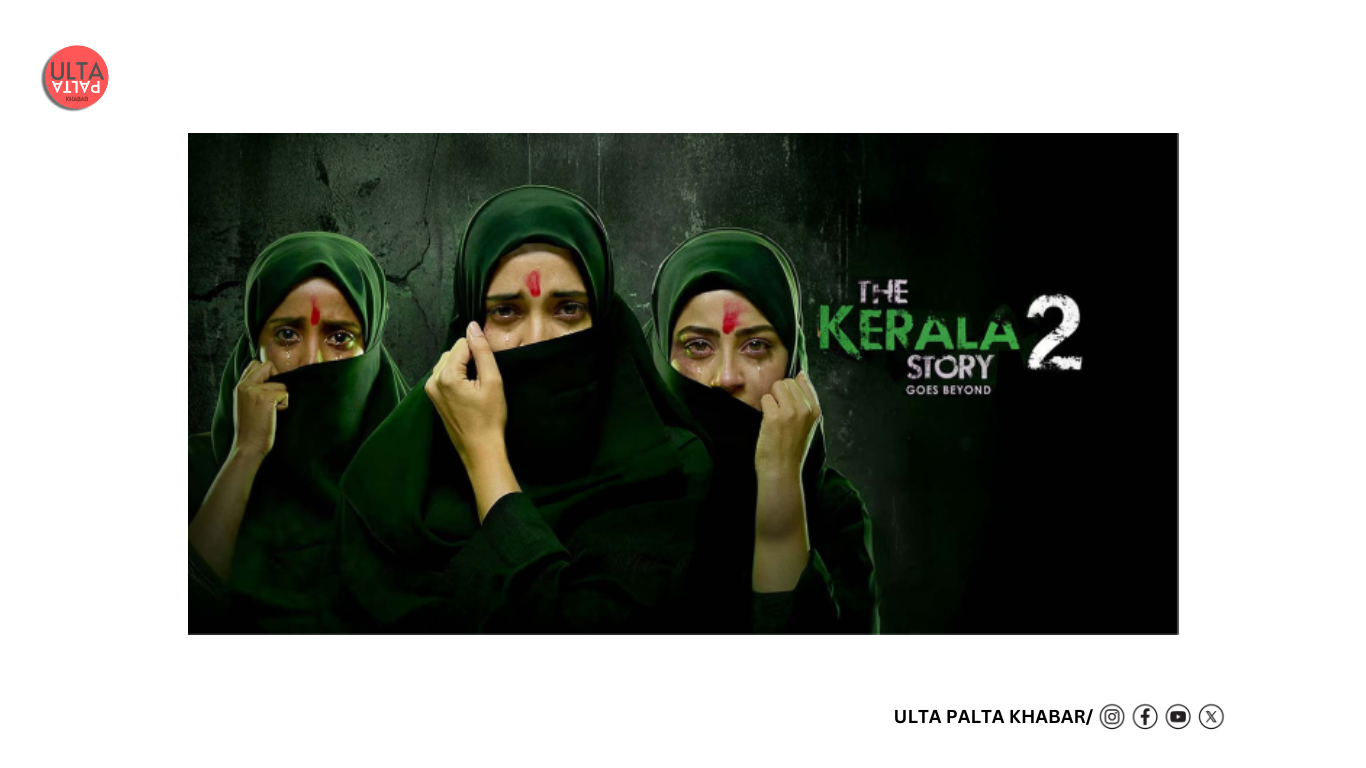
With just days to go before release, the makers of The Kerala Story 2 – Goes Beyond are locked in a heated legal battle after multiple petitions sought to block the film’s theatrical run. But the film’s producer, Vipul Amrutlal Shah, has come out swinging, calling the legal challenges “premature, misconceived and not maintainable.”
And if the tone of the affidavit is anything to go by, this is no ordinary film dispute — it’s shaping up to be a full-blown clash between cinema, politics, law, and public sentiment.
Note: For optimal viewing on mobile devices, rotate the screen.
Courtroom Tension Peaks Ahead of Release
The matter is currently being heard by the Kerala High Court, where the fate of the film — at least temporarily — hangs in the balance.
Justice Bechu Kurian Thomas has scheduled a detailed hearing on the petitions, with arguments expected to scrutinize not just the film’s content but also the broader legal limits of pre-release challenges.
The timing couldn’t be more dramatic. The film is scheduled for a wide theatrical release on February 27, reportedly across more than 1,800 screens in India and overseas. Any delay or restraint order could mean massive financial consequences — something the producer has strongly emphasized.
Note: For optimal viewing on mobile devices, rotate the screen.
Producer’s Bold Stand: “You Can’t Judge a Film by a Teaser”
At the heart of the controversy is a familiar modern-day trigger — a teaser.
Opponents of the film argue that promotional material portrays Kerala in a negative and communally sensitive light. But Shah’s legal response is crystal clear: a two-minute teaser cannot be treated as the full film.
In his affidavit, he argues that restraining a certified film without examining it in entirety would cause “catastrophic and irreversible economic harm” — not just to the producer but also to distributors, theatre owners, and the wider exhibition ecosystem.
It’s a powerful argument in an industry where release windows, marketing campaigns, and theatre bookings involve enormous financial risk.
CBFC vs Courtroom: Who Has the Final Word?
One of the most crucial legal points raised in the affidavit revolves around certification authority.
Shah has firmly stated that the Central Board of Film Certification is the sole expert body empowered to evaluate films for public exhibition. Once a film is certified, he argues, courts should not substitute their own interpretation of content — unless there is clear legal violation.
This is not just a technical argument. It strikes at the heart of a long-running debate in Indian cinema:
Who ultimately decides what audiences can watch — expert regulators or public pressure backed by litigation?
If courts begin halting releases based solely on promotional content or anticipated reactions, producers fear it could open the floodgates for pre-release censorship through legal activism.
Allegations of Malicious Intent
The producer didn’t stop at defending the film — he went further, directly questioning the motive behind the petitions.
One of the petitions was filed by a resident of Kannur, and Shah has alleged the complaint was driven by financial motives rather than genuine concern.
He described the legal challenge as an “abuse and misuse of the process of law,” suggesting the film has become a target for strategic litigation — something increasingly common with politically charged films.
Title Controversy: Why “Goes Beyond” Matters
Another fascinating argument from the producer revolves around the film’s title.
According to the affidavit, the phrase “Goes Beyond” is not decorative — it is intentional. The sequel’s narrative, he claims, extends beyond Kerala’s geographical boundaries and explores wider themes.
In other words, the film is not meant to be a direct commentary on Kerala alone — but a broader narrative inspired by multiple contexts.
This distinction could prove crucial in court, especially since judges earlier observed that portraying Kerala inaccurately could risk communal tensions.
The Shadow of the First Film
This sequel inevitably carries the legacy — and baggage — of The Kerala Story, one of the most polarizing films in recent Indian cinema.
The original sparked nationwide debate, political reactions, protests, and intense public discourse. For supporters, it was a bold exposé. For critics, it was controversial and divisive.
Now, the sequel appears to be inheriting not just the brand — but also the storm.
Can Public Threats Stop a Film?
Perhaps the most explosive argument in the producer’s submission concerns public order.
Shah has argued that if potential protests or law-and-order concerns become grounds to block a film, then any group could effectively veto artistic expression simply by threatening disruption.
His message is clear: maintaining public order is the state’s responsibility — not a reason to silence cinema.
This argument echoes past Supreme Court observations in similar film controversies, where courts have repeatedly warned against allowing mob pressure to dictate cultural expression.
What Happens If the Court Intervenes?
The implications of this case stretch far beyond one film.
If the court restricts release based on teaser-level concerns, it could create a powerful precedent. Filmmakers across India may face more legal challenges before release, especially when dealing with sensitive themes.
Studios may become cautious. Investors may hesitate. Scripts may be rewritten to avoid controversy.
In short — creative risk could shrink dramatically.
On the other hand, if the court allows release without restraint, it may reinforce the authority of certification bodies and strengthen free-expression protections in cinema.
Either way, the decision will likely shape the legal future of controversial filmmaking in India.
The Industry Is Watching Closely
Inside Bollywood and beyond, producers, distributors, and streaming platforms are watching this case with intense interest.
Why? Because the outcome could redefine the economics of film releases.
Marketing campaigns, global distribution deals, and theatrical rollouts operate on tight timelines. A last-minute legal block can derail entire financial models.
For big-budget films especially, uncertainty is more dangerous than controversy.
The Bigger Question: Cinema vs Sensitivity
This legal battle ultimately reflects a deeper cultural tension — the struggle between artistic storytelling and social sensitivity.
India’s film industry has always navigated complex terrain involving religion, politics, identity, and history. But in the age of instant outrage and viral reaction, every frame can become a flashpoint.
The Kerala Story 2 controversy is not just about one film — it’s about how far storytelling can go in a society that is increasingly reactive, polarized, and legally engaged.
Also Read: https://ultapaltakhabar.com/ranveer-singh-gets-interim-relief-in-kantara-controversy/
What Happens Next?
All eyes are now on the High Court hearing.
If the court allows release — the film could open amid massive publicity, heightened curiosity, and explosive box office potential.
If restrictions come — the controversy will intensify, and the legal battle could escalate to higher courts.
Either way, one thing is certain:
This film is already a headline machine — and it hasn’t even released yet.
And in today’s attention economy, that might be the biggest opening weekend advantage of all.
Note: For optimal viewing on mobile devices, rotate the screen.
You May Like:
- ultapaltakhabar.com/kritika-kamra-gaurav-kapur-wedding-date-revealed-intimate-march-11-ceremony-grand-mumbai-celebration-to-follow/
- ultapaltakhabar.com/anurag-kashyaps-kennedy-turns-pandemic-paranoia-into-dark-cinema/
- ultapaltakhabar.com/karan-johar-goes-on-digital-detox-bollywoods-mastermind-logs-off-instagram-after-backing-dhurandhar-border-2-and-defending-varun-dhawan/
- ultapaltakhabar.com/vijays-jana-nayagan-caught-in-censor-storm-again-as-madras-high-court-sets-aside-u-a-16-order/

 By
By