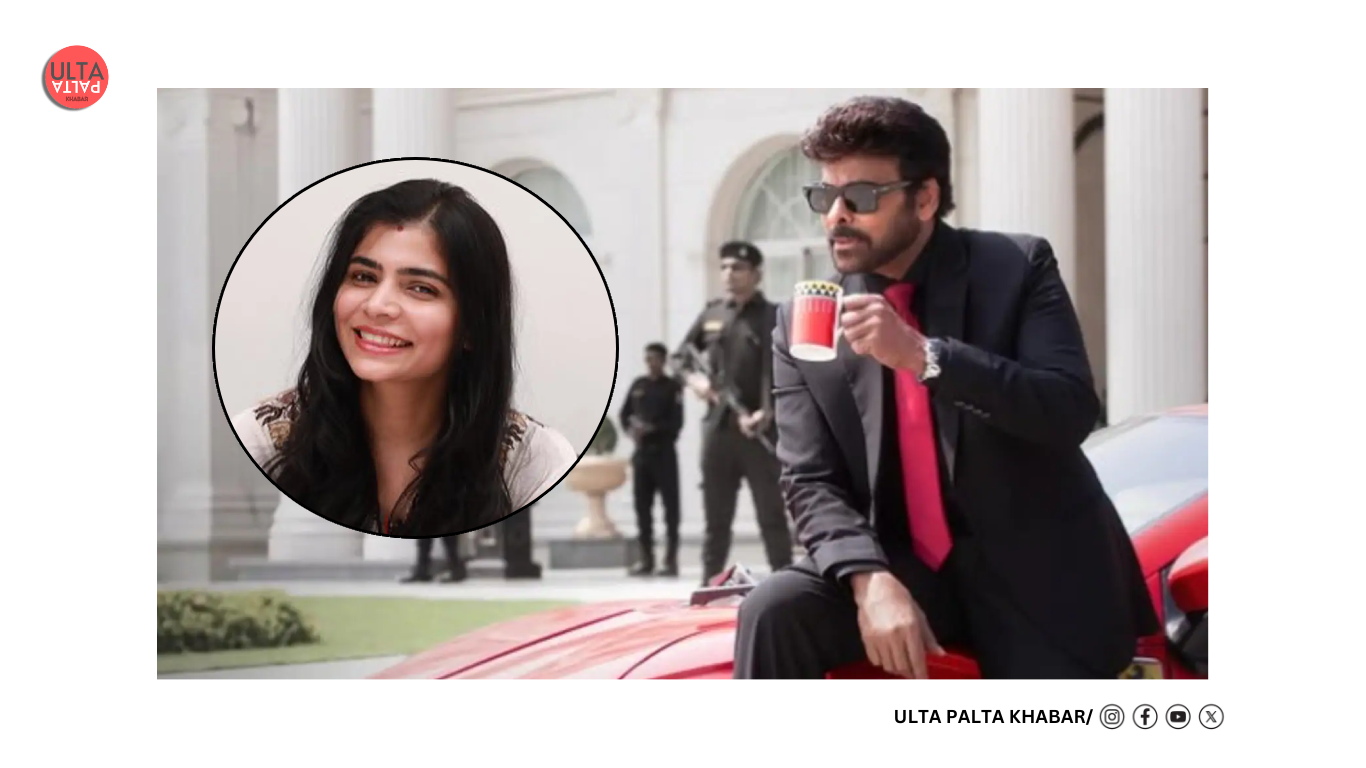

Singer Chinmayi Sripaada’s powerful X posts reopen the casting couch conversation after Chiranjeevi’s remarks, triggering intense reactions about accountability, power dynamics, and the MeToo movement in Indian cinema.
The Indian entertainment industry is once again in the middle of a storm — and this time, the spark came from two powerful voices standing on opposite sides of a deeply sensitive issue. Veteran Telugu megastar Chiranjeevi, during a recent success meet of his film Mana Shankara Vara Prasad Garu, stated that “there is no casting couch culture as such” and that the industry simply mirrors the character of individuals working within it.
But singer and activist Chinmayi Sripaada strongly disagreed — and she didn’t hold back.
Taking to X (formerly Twitter), Chinmayi responded with a series of emotionally charged posts, sharing disturbing anecdotes, lived experiences, and systemic realities faced by women in the entertainment industry. Her blunt declaration — “Casting couch is rampant” — immediately ignited fierce debate across social media, film circles, and fan communities.
What followed was not just another celebrity clash, but a renewed conversation on power, silence, privilege, and accountability in Indian cinema.
Note: For optimal viewing on mobile devices, rotate the screen.
What Chiranjeevi Said That Triggered the Debate
During the Hyderabad success event of Mana Shankara Vara Prasad Garu, Chiranjeevi was asked about the casting couch culture and the MeToo movement. According to reports, the superstar remarked that:
“There is no casting couch culture as such. It depends on the individual. The industry is like a mirror — it reflects who you are.”
While the statement appeared to emphasize personal ethics and responsibility, many interpreted it as downplaying the structural nature of exploitation and harassment in the industry.
Within hours, Chinmayi Sripaada responded — not with anger alone, but with examples that highlighted how deeply embedded the problem still is.
Chinmayi: “Casting Couch Is Rampant”
Chinmayi shared screenshots and personal accounts of women facing verbal abuse, exploitation, and coercion in the entertainment ecosystem. One incident involved a woman who moved from the US to India for work and was verbally assaulted. Chinmayi used this to underline how newcomers often misinterpret industry language and expectations.
She wrote that in the film industry, words like “full commitment” often carry hidden meanings that go far beyond professionalism.
“Casting couch is rampant, women are refused roles if they don’t offer ‘full commitment’ — a word that means completely different in the film industry.”
She added that many educated women enter the industry believing commitment refers to discipline, punctuality, and craft — only to realize later that it is often code for sexual compliance.
Chinmayi further stated that men in positions of power frequently believe they are entitled to sexual access simply because they control opportunities.
Note: For optimal viewing on mobile devices, rotate the screen.
Disturbing Allegations and Industry Silence
In another post, Chinmayi recounted a chilling incident involving a female musician who allegedly locked herself inside a studio sound booth to escape an attempted sexual assault by a powerful individual. The woman reportedly quit that professional space entirely after the incident.
She also referenced repeat offenders who continue to be publicly celebrated and platformed despite multiple allegations of misconduct — highlighting how audience amnesia and industry protection often shield accused individuals from consequences.
“The abuse and sexual harassment of girls is a rampant issue,” she emphasized.
Her words struck a nerve, resonating with many women who shared similar experiences anonymously in comment sections.
Chinmayi’s Nuanced Take on Chiranjeevi
Interestingly, Chinmayi did not directly attack Chiranjeevi as an individual. Instead, she contextualized his perspective, acknowledging generational differences.
She wrote that Chiranjeevi comes from a time when co-stars were often family friends, mutual respect was more visible on sets, and professional boundaries were clearer in smaller, tightly-knit circles.
“Legendary Chiranjeevi garu comes from a generation where they all were friends or even family friends with their female co-artists, mutually respected each other… they are legends themselves.”
Her point was that personal experiences of safety do not negate systemic exploitation faced by others, especially in today’s massive, highly commercialized industry.
MeToo Movement and Generational Blind Spots
Chinmayi also revisited the MeToo movement in India, pointing out how several veterans struggled to comprehend its urgency and importance. She cited examples where women who spoke up were criticized instead of supported.
According to Chinmayi, cultural conditioning, reputation protection, and misplaced morality often silence survivors rather than empower them.
She argued that dismissing harassment complaints as attacks on family honor or dignity only deepens trauma and discourages reporting.
Chinmayi’s Personal Trauma: A Painful Reminder
One of the most powerful sections of Chinmayi’s posts was her candid recollection of facing molestation by a respected industry figure when she was barely out of her teens. She stated that even having a parent present nearby did not prevent the abuse — reinforcing that predators exploit power dynamics, not opportunity gaps.
Her words were raw, direct, and deeply unsettling — reminding readers that exploitation does not always look dramatic or visible from the outside.
She concluded that no woman invites harassment by ambition, clothing, professionalism, or presence — power misuse remains the root problem.
Social Media Erupts: Support, Debate, and Polarization
As expected, social media exploded with reactions.
Supporters praised Chinmayi for her courage, consistency, and refusal to let uncomfortable conversations fade away. Many women echoed her statements, sharing anonymous stories of exploitation, coercion, and silent suffering.
Others defended Chiranjeevi, arguing that his comments were taken out of context and that he merely spoke from personal experience rather than dismissing victims.
What became evident, however, is that the industry still lacks a unified, transparent mechanism for addressing workplace safety and accountability.
Why This Debate Matters More Than Ever
The entertainment industry today is more global, digital, and accessible than ever before. Aspiring actors, singers, technicians, and creators from across India and abroad enter the ecosystem with dreams of opportunity — often unaware of its darker corners.
Chinmayi’s comments underline that:
- Power imbalance still dominates casting and hiring.
- Silence remains a survival strategy for many.
- Accountability mechanisms remain weak or slow.
- Cultural conditioning protects offenders more than victims.
At the same time, voices like Chinmayi’s are ensuring that uncomfortable truths cannot be buried under glamour, box office numbers, or celebrity worship.
Industry at a Crossroads
With rising scrutiny, digital transparency, and empowered audiences, the Indian film industry stands at a crossroads. Either it embraces reform, safety, and accountability — or continues facing recurring controversies that damage trust and credibility.
Chiranjeevi’s statement may have been well-intentioned, but Chinmayi’s response shows that systemic problems cannot be solved through individual morality alone.
The conversation is no longer about one actor or one singer. It is about an industry learning to listen — even when the truth is uncomfortable.
Final Word
Whether this debate leads to real reform or simply fades into the next viral cycle remains to be seen. But one thing is certain: Chinmayi Sripaada has once again forced the industry to confront a reality it often prefers to ignore.
And in a space built on stories, perhaps the hardest story to face is the one happening behind the camera.
Ulta Palta Khabar will continue tracking developments, reactions, and any official responses emerging from this explosive conversation.
Note: For optimal viewing on mobile devices, rotate the screen.
You May Like:
- ultapaltakhabar.com/vicky-kaushals-uri-crossover-in-dhurandhar-2-fans-react-strongly-as-ranveer-singh-sequel-sparks-shared-universe-debate/
- https://ultapaltakhabar.com/cbfc-vs-vijays-jana-nayagan-turns-dramatic-in-madras-high-court-as-makers-cite-dhurandhar-2-release-date-row/
- ultapaltakhabar.com/the-50-palace-tour-sparks-bigg-boss-pro-max-buzz-farah-khans-reality-show-faces-squid-game-comparisons-ahead-of-feb-1-premiere/
- ultapaltakhabar.com/shahid-kapoor-triptii-dimri-set-screens-on-fire-in-oromeo-trailer-vishal-bhardwaj-returns-with-his-darkest-love-story-yet/

 By
By