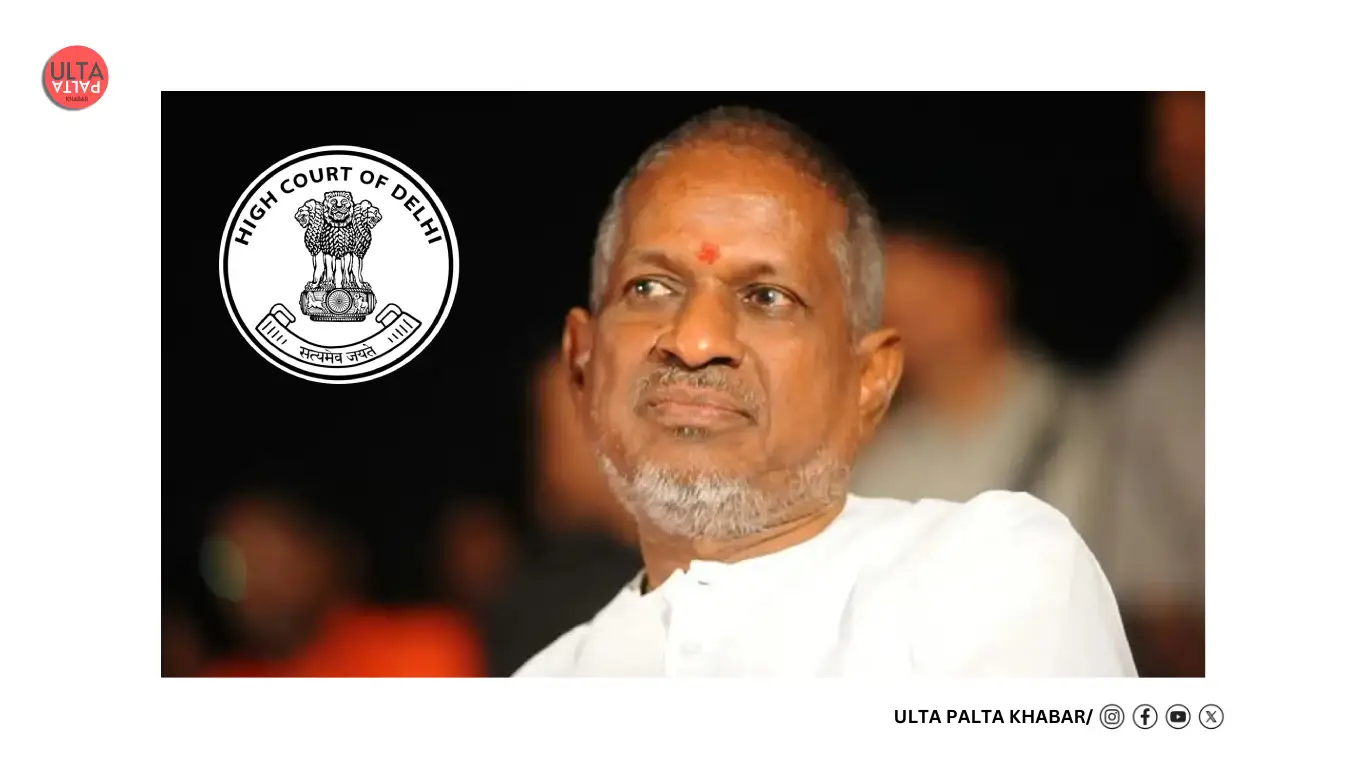

The Delhi High Court has ruled that legendary composer Ilaiyaraaja does not own copyright over the lyrics or sound recording of the iconic Tamil classic ‘En Iniya Pon Nilave’, triggering massive debate across the Indian music and film industries.
One of Indian cinema’s most respected musical legends has suffered a major legal setback — and the verdict could completely reshape the future of song ownership battles in the entertainment industry.
In a landmark ruling that has sent shockwaves through the South Indian film and music business, the Delhi High Court has upheld an earlier order stating that legendary composer Ilaiyaraaja does not hold copyright over either the lyrics or the sound recording of the iconic Tamil song En Iniya Pon Nilave.
The judgment came in a high-profile copyright dispute involving Saregama India Limited and the proposed recreation of the classic song for the Tamil film Aghathiyaa.
And now, the ruling has ignited one of the biggest conversations Indian music circles have seen in years: who truly owns a song — the composer, the producer, or the music label?
Note: For optimal viewing on mobile devices, rotate the screen.
What Exactly Did The Delhi High Court Say?
The Division Bench of Justices C Hari Shankar and Om Prakash Shukla dismissed Ilaiyaraaja’s appeal and strongly clarified how copyright law applies to songs used in films.
According to the Court, the term “musical work” under Section 2(p) of the Copyright Act refers only to the composition itself — not the lyrics and not the sound recording.
That distinction became the core reason behind the verdict.
The Court ruled that while Ilaiyaraaja composed the music, he could not claim ownership over the final sound recording or lyrical portions attached to the song.
Instead, those rights legally vested with the producer of the original 1980 Tamil film Moodu Pani, which featured En Iniya Pon Nilave.
The producer, Raja Cine Arts, had allegedly assigned those rights to Saregama decades ago through a formal agreement signed in February 1980.
That single contract ultimately became more powerful than artistic legacy itself.
Note: For optimal viewing on mobile devices, rotate the screen.
The Song At The Centre Of The Storm
For Tamil cinema fans, En Iniya Pon Nilave is not just another retro song.
It’s emotional history.
Originally composed by Ilaiyaraaja and sung by legendary playback singer K J Yesudas, the track became one of the most iconic melodies in Tamil film music history.
Its haunting composition, melancholic mood and emotional depth turned it into a cult classic over generations.
That’s precisely why its recreation for Aghathiyaa triggered such intense controversy.
For the new version, the song was recreated by Yuvan Shankar Raja — Ilaiyaraaja’s own son — and sung by Vijay Yesudas.
The emotional father-son legacy attached to the recreation made the legal clash even more dramatic.
Why Saregama Moved Court Against Aghathiyaa
The controversy began after Saregama allegedly discovered promotional material and teasers for Aghathiyaa using the recreated version of En Iniya Pon Nilave.
The company claimed that it owned the sound recording rights as well as the associated musical and literary rights through its decades-old agreement with the original producer.
According to court records, Saregama issued cease-and-desist notices after spotting the recreated version online and later approached the Delhi High Court when the song reportedly appeared on streaming platforms anyway.
Meanwhile, Vels Films International argued that it had legally obtained permission from Ilaiyaraaja himself to recreate and adapt the song.
And that’s where the entire legal conflict exploded.
Because Ilaiyaraaja maintained that as the original composer, he retained ownership over the musical work and therefore possessed the right to license adaptations.
But the Court disagreed.
Why This Verdict Could Change The Music Industry Forever
The ruling goes far beyond one Tamil song.
This judgment could significantly affect how composers, producers, music labels and filmmakers negotiate rights in the future — especially in India’s remake and recreation-heavy entertainment economy.
Today, old songs are goldmines.
Streaming platforms, remixes, nostalgic recreations and retro marketing have turned classic film tracks into massive commercial assets once again. One viral recreated song can generate crores through streaming revenue, reels, licensing deals and film promotions.
That’s why ownership battles around old songs are becoming increasingly aggressive.
And the Ilaiyaraaja verdict now strengthens the position of producers and music labels holding old contractual rights.
In simple terms: emotional ownership and legal ownership are not always the same thing.
The Emotional Blow For Ilaiyaraaja Fans
For millions of fans, however, the verdict feels deeply uncomfortable.
Because culturally, audiences naturally associate En Iniya Pon Nilave with Ilaiyaraaja’s genius — not with paperwork signed decades ago.
Social media reactions have already turned emotional, with many fans arguing that composers deserve stronger creative control over songs they personally built and popularized.
Others, however, believe the verdict reinforces the legal realities of the film business, where producers historically financed projects and retained rights over final film content.
The debate is now becoming philosophical as much as legal.
Can art truly belong to corporations once audiences emotionally attach it to creators?
Indian cinema may now be forced to confront that question repeatedly.
Aghathiyaa’s Release Drama Added More Chaos
The timing of the case made things even messier.
Since Aghathiyaa was already scheduled for release in January 2025, the Court initially allowed the recreated song’s use temporarily — provided Vels Films deposited ₹30 lakh as a licensing fee.
However, the producers later reportedly decided to release the film without the recreated song after failing to deposit the amount.
That twist added another dramatic layer to the controversy.
A recreated version involving Ilaiyaraaja’s own family ultimately disappeared from the film entirely because of copyright complications.
Why The 2012 Copyright Amendment Couldn’t Save Ilaiyaraaja
One major argument from Ilaiyaraaja’s side reportedly involved the 2012 amendment to the Copyright Act, which strengthened royalty protections for creators and composers.
However, the Court refused to apply those amendments retrospectively to contracts and rights agreements executed decades earlier.
That legal interpretation proved crucial.
Had the Court accepted retrospective application, the ruling could have opened the door for numerous composers and artists across India to reclaim rights over classic songs.
Instead, the judgment reinforces the older producer-controlled ownership framework for many legacy film tracks.
The Future Of Retro Music Rights In India Just Became More Complicated
This case may only be the beginning.
Bollywood, Kollywood and streaming platforms increasingly rely on nostalgia-driven content. Old songs are constantly being recreated, sampled and monetized for younger audiences.
That means more legal battles are almost guaranteed in coming years.
And after this verdict, music companies holding vintage contracts now possess a stronger legal shield than ever before.
For creators, composers and artists, the judgment may trigger demands for broader copyright reform and more artist-friendly ownership structures moving forward.
But for now, one thing is crystal clear:
The Delhi High Court has drawn a sharp line between artistic creation and legal ownership — and the Indian music industry will be debating that line for a very long time.
Note: For optimal viewing on mobile devices, rotate the screen.
You May Like:
- https://ultapaltakhabar.com/alia-bhatt-sharvari-become-the-first-guests-on-samay-rainas-indias-got-latent-season-2-viral-photo-sparks-massive-buzz-ahead-of-alpha/
- https://ultapaltakhabar.com/blake-lively-vs-justin-baldoni-court-dismisses-major-claims-in-it-ends-with-us-legal-war-trial-set-for-explosive-showdown/
- https://ultapaltakhabar.com/oscars-2026-winners-one-battle-after-another-dominates-as-michael-b-jordan-paul-thomas-anderson-shine-at-98th-academy-awards/
- https://ultapaltakhabar.com/priyanka-chopra-steals-the-spotlight-at-oscars-2026-in-stunning-white-dior-gown-presents-award-with-javier-bardem/



 By
By